
.svg)

Double-Hung vs Single-Hung Sash Windows: UK Comparison Guide
Our Verdict
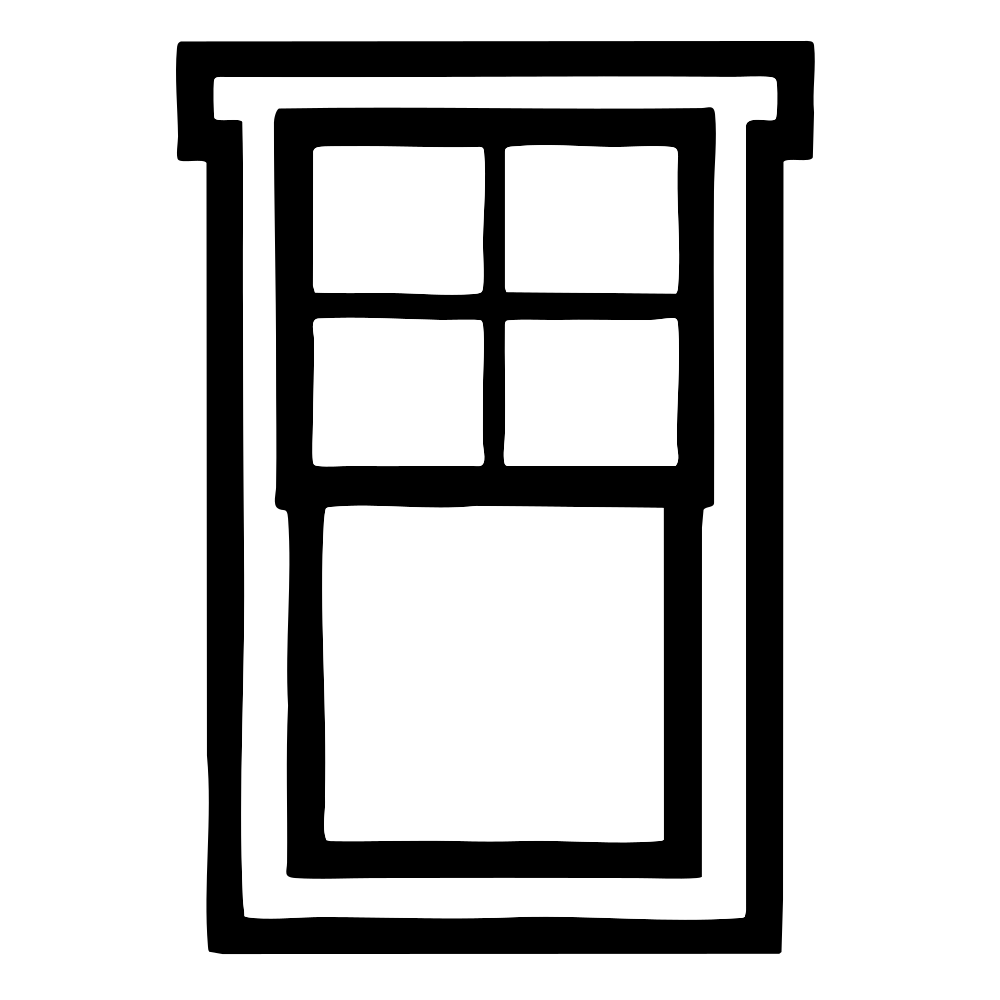
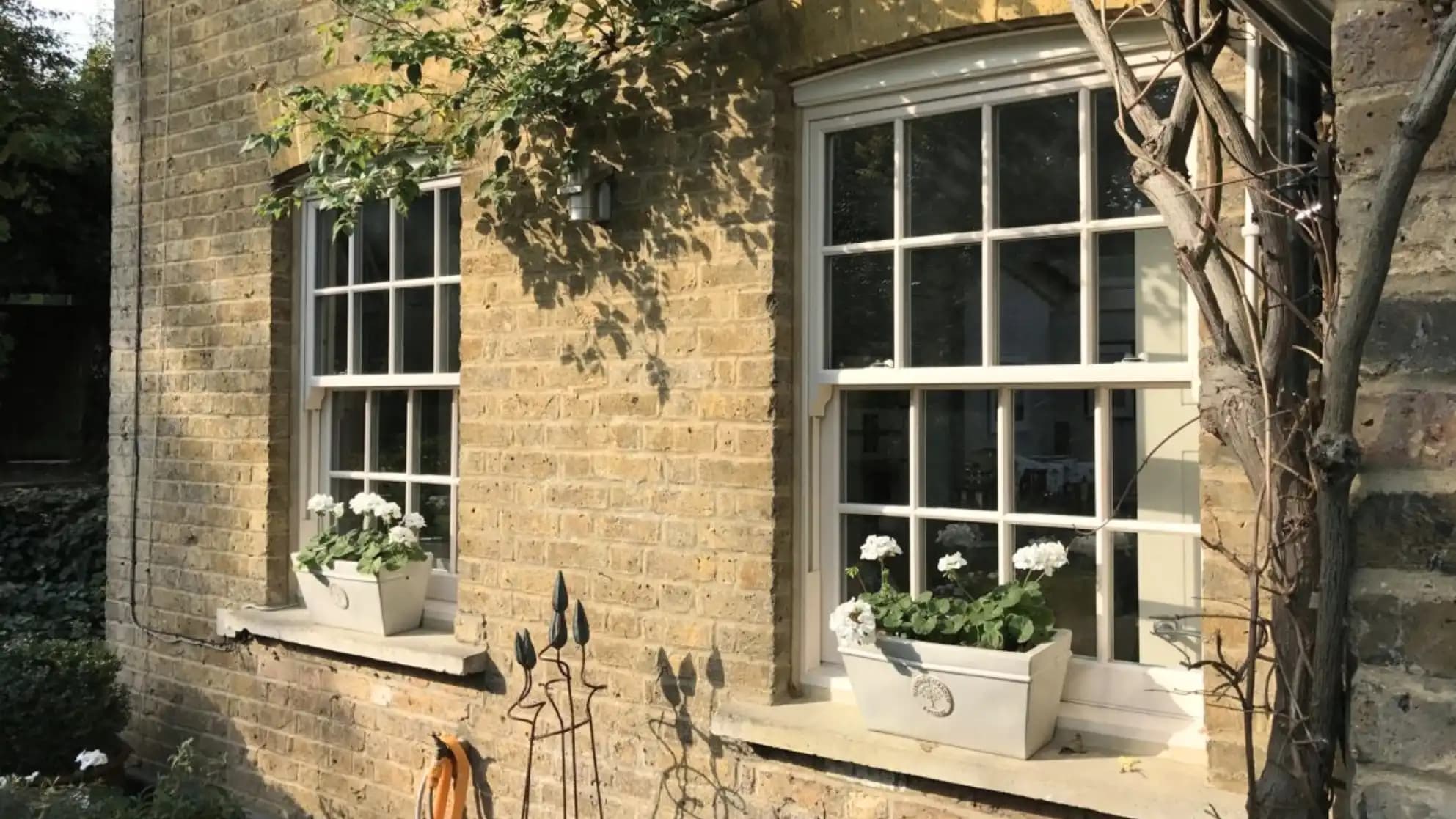
Double-hung sash windows — where both the top and bottom sashes slide vertically — are the traditional UK standard and offer superior ventilation, easier cleaning, and greater versatility. Single-hung windows, where only the bottom sash moves, are cheaper and more common in North America but relatively rare in the UK market. For most British homeowners, double-hung is the natural and recommended choice.
At a Glance
Double-Hung Sash Windows
Key Specs
- Both upper and lower sashes slide vertically
- Traditional UK sash window configuration
- Superior stack ventilation (top and bottom openings)
- Both sashes can be tilted or removed for cleaning
Single-Hung Sash Windows
Key Specs
- Only the bottom sash slides; top sash is fixed
- More common in North America and modern builds
- Simpler mechanism with fewer moving parts
- Slightly better air-tightness (one fewer moving joint)
Detailed Comparison
| Feature | Double-Hung Sash Windows | Single-Hung Sash Windows |
|---|---|---|
| Sash Movement | Both top and bottom sashes slide | Only bottom sash slides; top is fixed |
| Typical UK Cost | £800-£2,800 per window | £500-£1,800 per window |
| Ventilation Options | Open top, bottom, or both simultaneously | Open bottom only |
| Stack Ventilation | Excellent — warm air exits top, cool air enters bottom | Limited — only one opening point |
| Ease of Cleaning | Both sashes accessible for internal cleaning | Top sash fixed — exterior cleaning requires access from outside |
| Traditional UK Authenticity | Standard UK configuration since the 17th century | Not traditional in UK architecture |
| Conservation Area Suitability | Preferred by conservation officers | May raise questions about authenticity |
| Complexity of Mechanism | More complex — two sets of weights/balances required | Simpler — one set of weights/balances |
| Air-Tightness | Good with modern draught-proofing | Slightly better — one fewer moving joint to seal |
| Security | Both sashes need securing with locks | Fixed top sash provides inherent security at top |
| Availability in UK Market | Widely available from all UK manufacturers | Limited — fewer UK manufacturers offer this option |
| Weight Balance System | Two pairs of counterweights or spiral balances | One pair of counterweights or spiral balances |
| Child Safety | Top opening without bottom — safer with children | Only bottom opens — child restrictors recommended |
Choose Double-Hung Sash Windows If...
- You want maximum ventilation control with the ability to create effective stack ventilation
- Your property is a period building where double-hung sash windows are the historically correct configuration
- You need easy cleaning access for upper-floor windows without using ladders
- You are in a conservation area where authentic sash window configurations are required
Choose Single-Hung Sash Windows If...
- You have a tight budget and the 15-30% cost saving is a significant factor
- The windows are on the ground floor where cleaning the fixed upper sash is straightforward
- You prefer a simpler mechanism with fewer moving parts and potential failure points
- Your property is modern and conservation area authenticity is not a consideration
Cost Comparison
Double-hung timber sash windows typically cost £1,200-£2,800 per window supplied and installed, depending on timber species, glazing specification, and bespoke detailing. Double-hung uPVC sash windows cost £600-£1,200. Single-hung equivalents are 15-30% cheaper: £500-£1,800 for timber and £400-£900 for uPVC. For a full house with 8-10 windows, the total project cost ranges from £5,000-£10,000 (uPVC double-hung), £4,000-£8,000 (uPVC single-hung), £10,000-£22,000 (timber double-hung), or £7,000-£16,000 (timber single-hung). The cost saving of single-hung is appealing but relatively modest in the context of a whole-house window project, and the functional advantages of double-hung typically justify the premium for UK homeowners.
Frequently Asked Questions
In a double-hung sash window, both the upper and lower sashes slide vertically, allowing either or both to be opened. In a single-hung window, only the bottom sash moves; the top sash is fixed in place. When closed, the two types look identical. The difference only becomes apparent when the window is in use.
Double-hung sash windows are overwhelmingly more common in UK homes. They have been the standard British sash window configuration since the 17th century. Single-hung windows are more associated with North American architecture. Most UK sash window manufacturers produce double-hung as their standard offering, with single-hung available as a cost-saving option.
Double-hung windows have one additional moving joint (the upper sash) compared to single-hung, which creates a slightly longer perimeter of potential air leakage. However, with modern draught-proofing systems using brush pile or compression seals, the difference is negligible. A properly draught-proofed double-hung sash window can achieve air leakage rates comparable to modern casement windows.
Technically yes, but it is rarely straightforward or cost-effective. The frame would need to be modified to accommodate counterweights or spiral balances for the upper sash, and the upper sash itself would need to be remade or modified to slide. In most cases, the cost of conversion approaches or exceeds the cost of full replacement with new double-hung windows.
Stack ventilation uses the natural tendency of warm air to rise. By opening the upper sash (allowing warm air to exit at the top) and the lower sash (allowing cool air to enter at the bottom), you create a continuous circulation of air without draughts. This is significantly more effective than ventilation through a single opening and is one of the key functional advantages of double-hung sash windows.
Most conservation officers expect like-for-like replacement, which for period UK properties means double-hung. If the original windows were double-hung — as virtually all traditional British sash windows were — replacing them with single-hung could be considered a material change to the building's character. Always check with your local planning authority before specifying single-hung windows in a conservation area.
Marginally. The fixed upper sash on a single-hung window cannot be forced open from outside, providing a small security advantage at the top of the window. However, intruders typically target the lower sash or meeting rail, where both types are equally vulnerable. Both types can be specified to PAS 24 security standards with appropriate locking hardware.
Each sash is connected to counterweights by cords (traditionally cotton sash cord, now often braided nylon) that run over pulleys at the top of the frame. The weights are concealed in boxes within the frame jambs. For a double-hung window, there are four weights — two for the upper sash and two for the lower sash. Each weight matches the weight of its corresponding sash, allowing the sashes to stay in any position without support.
Yes. Most uPVC sash window manufacturers offer double-hung as their standard configuration. The sashes are counterbalanced by spring or spiral balances rather than traditional weights, and many include a tilt-in feature that allows both sashes to be tilted inward for cleaning. Leading UK manufacturers of double-hung uPVC sash windows include Roseview, Masterframe, and Bygone.
The lifespan difference is minimal. Single-hung windows have one fewer moving sash, which means slightly less wear on the frame and fewer components to maintain. However, the difference in practical lifespan is perhaps 5-10% at most. Both types, whether in timber or uPVC, will last 25-60 years depending on material and maintenance. The mechanism (weights, springs, or spiral balances) is the most likely component to need attention over time.
Need Help Choosing?
Our window specialists can help you choose the right windows for your property. Get a free, no-obligation consultation.