
.svg)


uPVC Sash vs Timber Sash Windows: Which Is Right for Your Home?
Our Verdict
Timber sash windows remain the gold standard for authenticity, conservation compliance, and visual beauty, but uPVC sash windows have improved dramatically and now offer a compelling alternative for non-heritage properties. If your home is in a conservation area or is a listed building, timber is almost certainly required. For all other properties, uPVC delivers similar functionality at roughly half the cost with virtually zero maintenance.
At a Glance
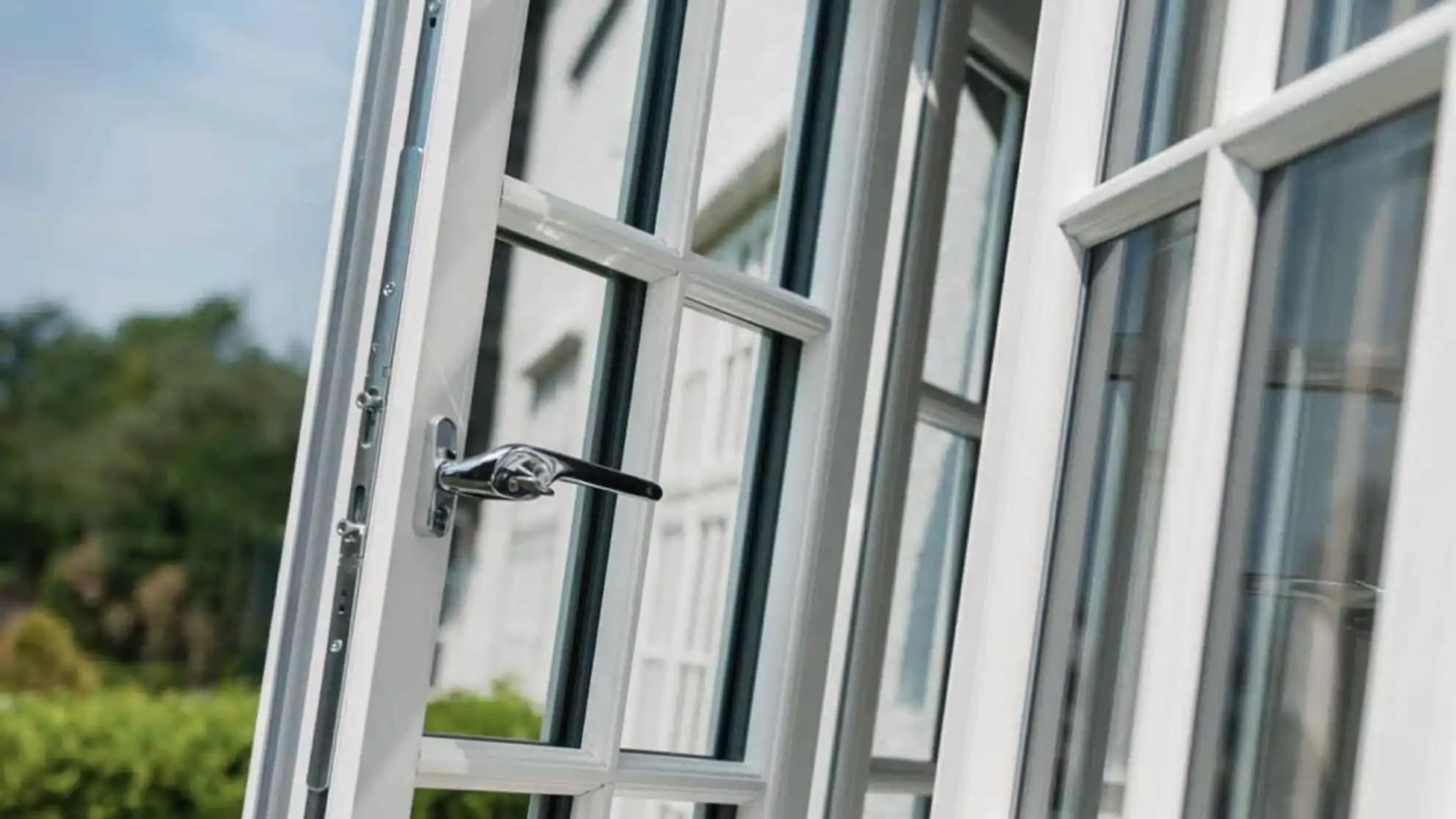
uPVC Sash Windows
Key Specs
- Maintenance-free frames — no painting required
- Spring or spiral balance operation
- Tilt-in facility for easy cleaning
- Available in woodgrain foil finishes
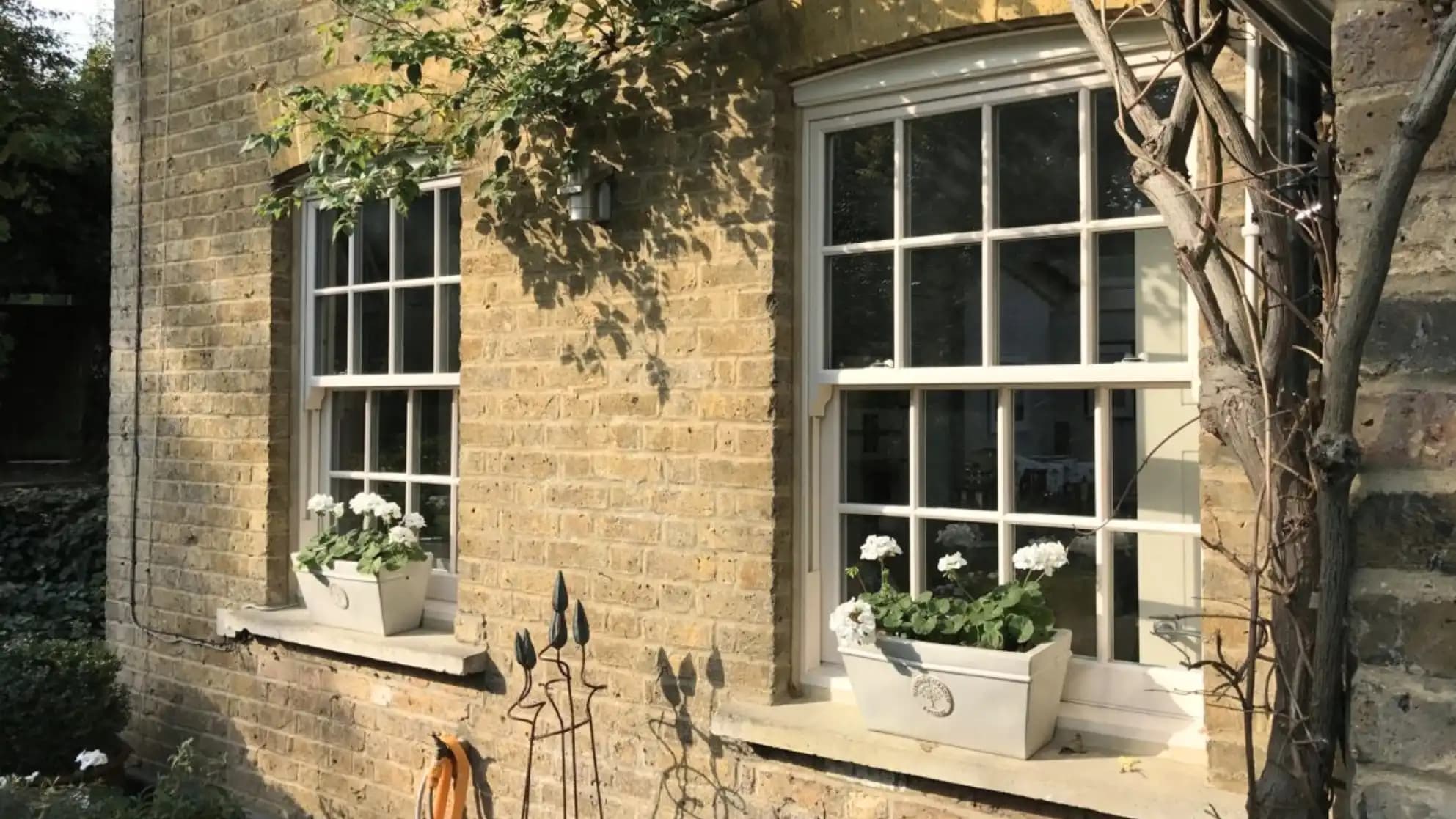
Timber Sash Windows
Key Specs
- Authentic profiles matching original windows
- Traditional weight and pulley or spiral balance
- Natural timber grain visible under paint or stain
- Approved for conservation areas and listed buildings
Detailed Comparison
| Feature | uPVC Sash Windows | Timber Sash Windows |
|---|---|---|
| Typical Cost (supply & fit) | £600-£1,200 | £1,200-£2,800 |
| Whole House (8-10 windows) | £5,000-£10,000 | £10,000-£22,000 |
| Authenticity | Good from a distance; less convincing up close | Authentic — matches original period windows exactly |
| Conservation Area Approval | Rarely approved (some flush-fit designs excepted) | Almost always approved |
| Maintenance | Virtually none — occasional wipe-down | Repaint every 5-10 years; periodic sash overhaul |
| Lifespan | 25-30 years | 40-60+ years with maintenance |
| Frame Thickness | Wider profiles (typically 100-120mm) | Slimmer profiles (typically 55-70mm) |
| Sightlines | Broader — more frame visible, less glass | Slimmer — more glass area, authentic proportions |
| Weight and Operation | Lighter sashes; spring balance operation | Heavier; traditional weight/pulley or spiral balance |
| Tilt Function | Most models tilt inward for cleaning | Not available — cleaning from outside or via access |
| Thermal Performance (U-value) | 1.2-1.4 W/m²K (double glazed) | 1.4-1.6 W/m²K (double glazed); 1.0-1.2 (triple) |
| Colour Options | White, cream, grey, black, woodgrain foils | Any RAL colour; natural stain or oil finishes |
| Glazing Bar Style | Stuck-on or integral Georgian bars | True through-bar or planted-on bars |
| Sash Horns | Moulded-on (not run-through) | Genuine run-through sash horns |
Choose uPVC Sash Windows If...
- Your property is a modern build, post-war house, or non-heritage property where conservation compliance is not required
- You prioritise low maintenance and do not want the ongoing commitment of painting and timber care
- Your budget is limited and you want sash window style at the lowest possible cost
- You value the tilt-in cleaning function, particularly for upper-floor windows
Choose Timber Sash Windows If...
- Your property is listed, in a conservation area, or has period architectural character worth preserving
- You want the slimmest possible sightlines and most authentic appearance for period-style windows
- You are investing for the long term and want windows that will last 40-60+ years
- You want the option of a natural stained or oiled timber finish rather than a painted or foiled surface
Cost Comparison
uPVC sash windows typically cost £600-£1,200 per window supplied and installed, depending on size and specification. A standard Victorian-proportioned uPVC sash window (approximately 1200mm x 600mm) with woodgrain foil and run-through sash horns sits at the higher end of this range. For a whole house with 8-10 sash windows, expect to pay £5,000-£10,000 for uPVC. Timber sash windows cost £1,200-£2,800 per window, with bespoke hardwood sash windows at the top of the range. Softwood sash windows in Scandinavian redwood cost £1,200-£1,800, while engineered hardwood or accoya sash windows range from £1,800-£2,800. A full house in timber costs £10,000-£22,000. Remember to factor in lifetime maintenance: uPVC requires virtually nothing, while timber will need £5,000-£15,000 in maintenance over 30 years for a typical house. On a pure cost-per-year basis, uPVC costs approximately £200-£400 per year (initial cost amortised over 25-30 years), while timber costs £250-£550 per year when you include maintenance (amortised over 40-60 years).
Frequently Asked Questions
In most conservation areas, uPVC sash windows are not approved. However, a growing number of planning authorities now accept high-specification flush-fit uPVC designs with mechanical joints, accurate profile replication, and woodgrain finishes. Always submit a pre-application enquiry to your local planning department with product literature and cross-section details before ordering.
uPVC sash windows typically last 25-30 years before the profiles begin to degrade and hardware fails. Timber sash windows last 40-60+ years with proper maintenance — and original Georgian and Victorian sash windows have lasted 150-200+ years, demonstrating the extraordinary longevity potential of quality timber. The key difference is that timber can be repaired and restored repeatedly, while uPVC generally cannot.
From 3-5 metres away, modern uPVC sash windows with woodgrain foil finishes look convincing. Up close, the wider profiles (100-120mm vs 55-70mm for timber), welded corner joints, and surface texture give them away. On a modern property where period authenticity is not expected, they look perfectly appropriate. On a Victorian or Georgian property, the differences are more jarring to a discerning eye.
Sash horns are the small projections at the bottom of the upper sash, originally a structural feature that strengthened the joint when wider glass panes replaced smaller Georgian glazing bars. On authentic timber sash windows, the horn is formed by extending the stile (vertical member) past the bottom rail — a 'run-through' horn. uPVC sash windows typically have moulded-on horns that are cosmetic rather than structural. Conservation officers can often identify uPVC windows by this detail.
Tilt-in cleaning mechanisms are available on some modern timber sash window designs, but they are uncommon and add complexity and cost. Most timber sash windows are cleaned from outside using a ladder, from inside by reaching out, or by removing the sashes (which is straightforward on traditional weight-and-pulley windows). If easy cleaning is a priority, this is a genuine advantage of uPVC.
Both can achieve high security ratings. Modern uPVC sash windows typically come with multi-point locking systems and can be specified to PAS 24 security standards. Timber sash windows can be fitted with sash locks, sash stops, and key-locking fitch fasteners. Both materials can accommodate laminated or toughened safety glass. Security performance depends more on the locking hardware than the frame material.
uPVC sash windows are available in white, cream, grey, black, and various woodgrain foil finishes (light oak, rosewood, Irish oak, etc.). Dual-colour options (different colours inside and outside) are common. Timber sash windows can be finished in any RAL colour using microporous paint, or in natural stains and oils that showcase the wood grain. Timber offers virtually unlimited colour choice, while uPVC is limited to the manufacturer's foil range.
Regular maintenance includes: checking and touching up paintwork annually (especially on exposed south and west elevations), repainting fully every 5-10 years, lubricating sash mechanisms and pulleys annually, checking sash cords for wear, clearing drainage channels and weep holes, and addressing any timber damage promptly before rot can spread. A well-maintained timber sash window can last 60+ years.
A flush-fit sash window has the sash sitting flush with the outer frame, replicating the appearance of a traditional timber sash window. A storm-proof design has the sash protruding slightly from the frame, which is more weatherproof but less authentic-looking. Flush-fit designs are more expensive but significantly more convincing as period-style replicas and stand a better chance of gaining conservation area approval.
Yes, this is sometimes possible if the box frame is in good condition. New sashes — either timber or in some cases uPVC — can be fitted into existing frames. However, the frames must be structurally sound, square, and capable of accepting the new sashes with appropriate draught-proofing. This approach can save money and preserve more of the original fabric, but it requires careful assessment by a specialist.
Need Help Choosing?
Our window specialists can help you choose the right windows for your property. Get a free, no-obligation consultation.