
.svg)





Hardwood vs Softwood Windows: Complete UK Comparison Guide
Our Verdict
Hardwood windows cost significantly more upfront but offer superior durability, longer lifespans, and reduced long-term maintenance. Softwood windows provide excellent value for budget-conscious projects and perform well when properly maintained. For period properties and conservation areas, hardwood is the premium choice; for new-builds and modern homes, well-specified softwood delivers outstanding performance at a lower price.
At a Glance
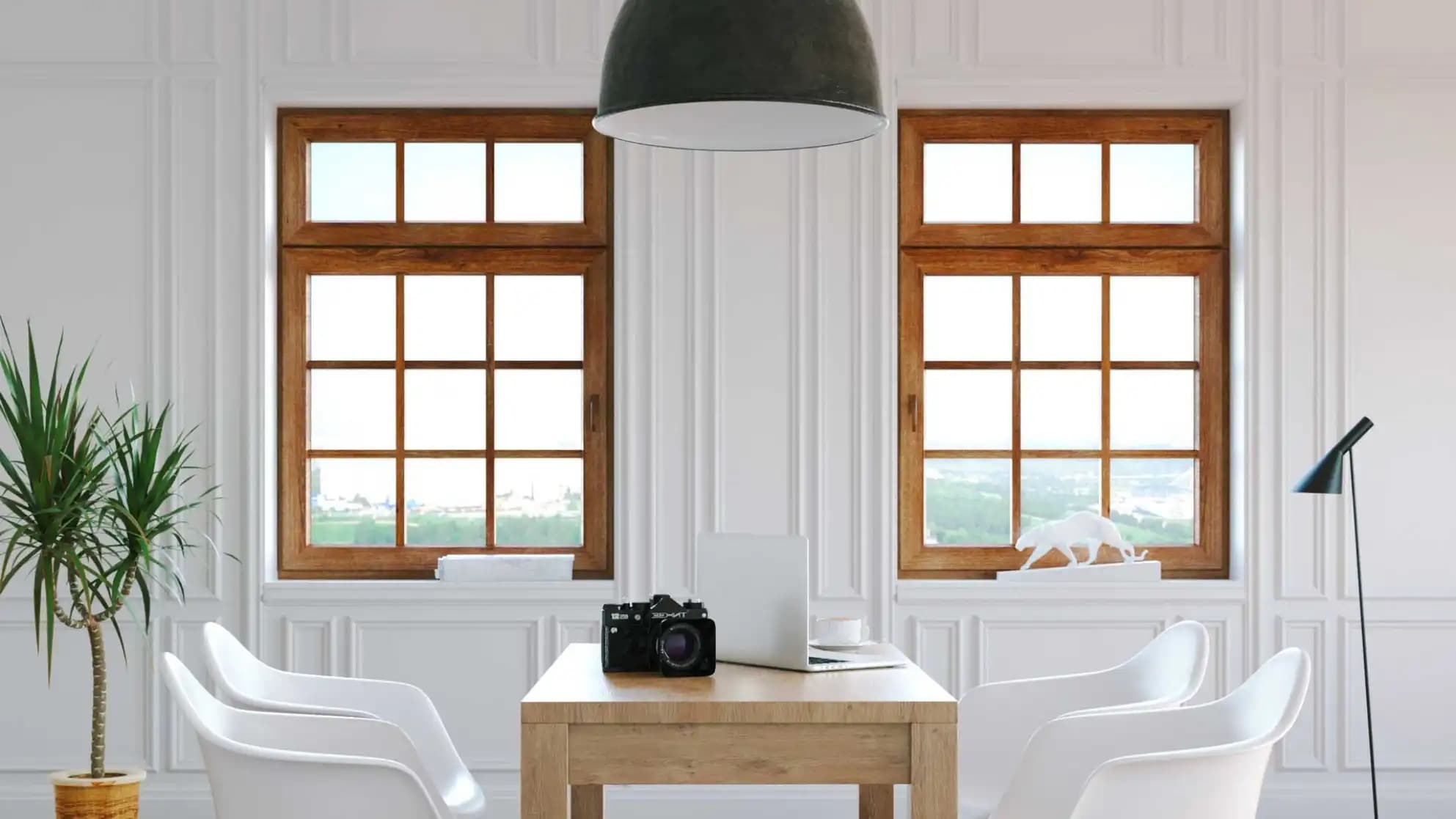
Hardwood Windows
Key Specs
- Species: oak, sapele, iroko, accoya, meranti
- Lifespan: 40-60+ years with maintenance
- Maintenance cycle: every 8-12 years
- Naturally resistant to rot and insects
Softwood Windows
Key Specs
- Species: Scandinavian redwood, pine, Douglas fir
- Lifespan: 25-40 years with maintenance
- Maintenance cycle: every 5-8 years
- Requires preservative treatment for durability
Detailed Comparison
| Feature | Hardwood Windows | Softwood Windows |
|---|---|---|
| Typical Cost (supply & fit) | £1,200-£3,500 per window | £800-£1,800 per window |
| Common Species | Oak, sapele, iroko, accoya, meranti | Scandinavian redwood, pine, Douglas fir, larch |
| Expected Lifespan | 40-60+ years | 25-40 years |
| Natural Rot Resistance | High (especially oak, iroko, accoya) | Low — requires preservative treatment |
| Grain Character | Prominent, attractive grain patterns | Finer, more uniform grain |
| Maintenance Frequency | Repaint/re-oil every 8-12 years | Repaint every 5-8 years |
| Dimensional Stability | Very stable (minimal swelling/shrinking) | More prone to movement with moisture |
| Weight | Heavier (denser timber) | Lighter, easier to handle and install |
| Machinability | Harder to machine, requires specialist tools | Easy to machine and profile |
| Stain/Oil Finish | Excellent — grain shows beautifully | Acceptable but less visually striking |
| Paint Finish | Excellent adhesion and longevity | Good adhesion, may need more frequent recoating |
| Conservation Area Suitability | Preferred by most planning officers | Often acceptable if correctly specified |
| Sustainability | Varies — FSC/PEFC certification essential | Scandinavian sources are well-managed and sustainable |
| Insect Resistance | High (oak and iroko are naturally resistant) | Lower — may require insecticide treatment |
Choose Hardwood Windows If...
- You own a period property in a conservation area where planning officers expect premium timber
- You want a natural oil or stain finish that showcases the beauty of the wood grain
- You prioritise maximum lifespan and are willing to invest more upfront to reduce long-term costs
- Your windows are in exposed positions (coastal, south-facing, high-altitude) where durability is critical
Choose Softwood Windows If...
- You are working to a tighter budget and want genuine timber windows at a lower price point
- You plan to have the windows painted in an opaque finish where grain character is not visible
- You are fitting windows in a new-build or modern extension where conservation compliance is not required
- You prefer a lighter frame that is easier to handle during installation and puts less stress on fixings
Cost Comparison
The cost gap between hardwood and softwood windows is significant but narrows when you consider lifetime value. A standard softwood casement window costs £800-£1,800 supplied and installed, while a comparable hardwood window runs £1,200-£3,500 depending on species. Oak commands the highest premium, with bespoke oak sash windows reaching £3,000-£3,500 each. Sapele and meranti sit at the lower end of the hardwood range, typically £1,200-£2,200. For a full house of 8-10 windows, expect to pay £7,000-£15,000 for softwood or £12,000-£30,000 for hardwood. However, factor in the longer maintenance intervals (saving £200-£400 per window over 50 years) and the extended lifespan (40-60 years vs 25-40 years), and the lifetime cost per year of service often favours hardwood. Accoya, at £1,500-£3,500 per window, offers an interesting middle ground with hardwood-beating durability from a modified softwood base.
Frequently Asked Questions
Not necessarily. Hardwood offers greater natural durability and a more attractive grain for stained finishes, but well-specified softwood with factory-applied preservative treatment performs excellently for 25-40 years. If you plan to paint your windows in an opaque finish, the aesthetic advantage of hardwood is invisible, making the extra cost harder to justify.
European oak is considered the gold standard for its combination of durability, beauty, and heritage authenticity. Sapele offers similar durability at a lower price with a rich mahogany-like appearance. Accoya provides the best technical performance (50-year guarantee, exceptional stability) but at a premium price. Iroko is excellent for exposed positions but less commonly specified for windows.
Hardwood windows with a quality microporous paint or stain system typically need recoating every 8-12 years. South and west-facing windows may need attention slightly sooner due to UV and rain exposure. Oil finishes on oak or sapele may need refreshing every 3-5 years but are quicker and easier to apply than full paint systems.
Softwood windows should be repainted every 5-8 years to maintain weather protection. The exact interval depends on exposure, paint quality, and original application. Factory-applied spray finishes last significantly longer than brush-applied finishes because they achieve more consistent coverage and film thickness.
Yes, many conservation areas accept softwood windows provided they match the original design in terms of profiles, proportions, and glazing bar details. Some planning authorities specify hardwood or leave the timber species open. Always check with your local conservation officer before ordering. Providing a detailed specification with timber species, section drawings, and finish details will strengthen your application.
Accoya is a modified timber made from fast-growing radiata pine (a softwood) that has been treated with acetic anhydride in a process called acetylation. This permanently changes the wood's cell structure, giving it durability that exceeds most hardwoods. It carries a 50-year above-ground guarantee, is dimensionally very stable, and is considered one of the most sustainable timber choices available.
Scandinavian redwood (Scots pine) is an excellent softwood for windows when slow-grown in Nordic climates. The cold, slow growing conditions produce tight growth rings that give the timber significantly better density, stability, and durability than fast-grown plantation pine. It is the most commonly specified softwood for UK timber windows and offers very good performance when properly treated and finished.
Yes. High-quality hardwood windows are viewed favourably by estate agents and buyers, particularly on period properties. Oak or sapele windows signal premium quality and can add perceived value to a property. In conservation areas, appropriate hardwood windows may be the only option that satisfies both planning requirements and buyer expectations.
Softwood from Scandinavian sources is generally considered more sustainable because the forests are well-managed, fast-regenerating, and FSC/PEFC certified. Tropical hardwoods like sapele and iroko require careful sourcing to ensure they come from legal, sustainable forestry operations — always insist on FSC or PEFC certification. European oak is sustainably available but slower-growing. Accoya offers the best environmental profile as it uses fast-growing pine and the acetylation process is non-toxic.
Yes, and this is a cost-effective strategy used by many homeowners. You might specify hardwood for the front elevation where appearance and planning compliance matter most, and softwood for the rear and sides where a painted finish is acceptable. Ensure both sets of windows are made by the same manufacturer to maintain consistent profiles and hardware across the property.
Need Help Choosing?
Our window specialists can help you choose the right windows for your property. Get a free, no-obligation consultation.