
.svg)



What Are Flush Sash Windows? Complete Guide for UK Homeowners
Quick Answer
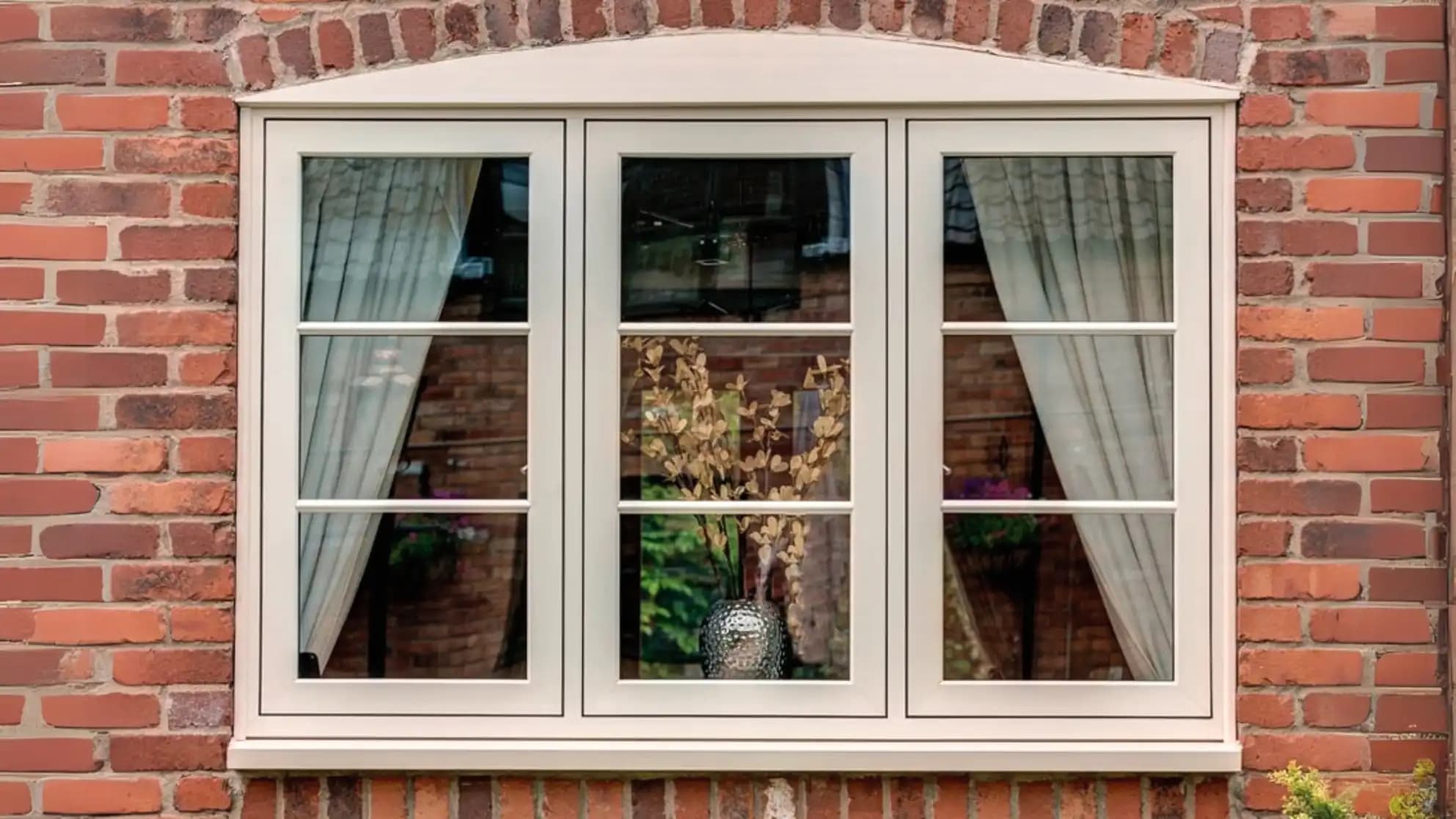
Flush sash windows are a modern style of window where the sash (the moving part) sits completely flush with the outer frame, rather than overlapping it. This creates a smooth, flat exterior profile that closely replicates the clean lines of traditional timber windows, making them a popular choice for both contemporary homes and conservation areas across the UK.
At a Glance
Flush sash windows have become one of the fastest-growing window styles in the UK, combining the clean aesthetics of traditional timber joinery with the performance benefits of modern manufacturing. Unlike standard casement windows where the sash visibly overlaps the frame, flush sash windows feature a sash that sits perfectly level with the outer frame, creating an elegant, streamlined appearance. This design originated from the desire to replicate the look of period timber windows using more durable and cost-effective materials like uPVC. Today, flush sash windows are widely specified by architects and approved by many local planning authorities for use in conservation areas, Article 4 zones, and listed building buffer zones where traditional aesthetics must be maintained.
How Flush Sash Windows Differ from Standard Casement Windows
The key difference between flush sash and standard casement windows lies in how the opening sash relates to the outer frame. On a standard casement window, the sash overlaps the frame by approximately 15-20mm, creating a visible step or lip on the exterior. This stepped profile is a distinctly modern look that can appear out of place on period properties. With flush sash windows, the sash is engineered to sit precisely level with the frame, eliminating this overlap entirely. The result is a smooth, flat facade that mirrors the appearance of traditional jointed timber windows. Internally, the sash may sit flush or slightly recessed depending on the system used. This seemingly small design change has a profound impact on the overall aesthetic of a property, which is why flush sash windows have become the preferred choice for heritage-sensitive projects across the UK.
Flush Sash vs Traditional Sliding Sash Windows
Despite sharing the word 'sash' in their name, flush sash windows and traditional sliding sash windows operate very differently. Traditional sash windows slide vertically within a box frame using weights, springs, or spiral balances. Flush sash windows, by contrast, are hinged like casement windows and swing open outward. The 'flush' in their name refers to the flat profile of the sash against the frame, not to the operating mechanism. Some manufacturers now offer flush-fitting sliding sash windows that combine the vertical sliding action of a traditional sash with a flush exterior profile. These are technically different products from flush casement sash windows, so it is worth clarifying which type is being discussed when obtaining quotes. Both styles achieve a heritage-appropriate appearance, but sliding sash versions tend to cost more due to their more complex operating mechanisms.
Conservation Areas and Planning Approval
One of the primary reasons homeowners choose flush sash windows is for their suitability in conservation areas. Many local planning authorities in England and Wales require replacement windows in conservation areas to closely match the appearance of the original windows. Standard uPVC casement windows are frequently rejected on planning grounds because their stepped sash profile looks noticeably different from traditional timber. Flush sash windows address this concern by providing the flat profile that planning officers look for. Several leading flush sash systems have been specifically tested and approved by conservation officers in councils across Hertfordshire, Essex, and Cambridgeshire. However, approval is never guaranteed and varies by local authority, so it is always advisable to submit a planning application or seek pre-application advice before ordering windows for a conservation area property.
Material Options for Flush Sash Windows
Flush sash windows are available in three main materials, each offering different benefits. uPVC flush sash windows are the most affordable option, starting from around £400 per window, and offer excellent thermal performance with minimal maintenance requirements. Modern uPVC flush sash systems feature realistic woodgrain foils and mechanical joint options that closely mimic timber. Timber flush sash windows provide the most authentic appearance, with prices from £800 per window, and are the preferred choice where absolute period authenticity is required. Hardwood species like Accoya and Sapele offer exceptional durability, while softwood provides a more budget-friendly timber option. Aluminium flush sash windows deliver the slimmest sightlines and a contemporary aesthetic from around £700 per window. Hybrid options combining aluminium exterior cladding with a timber interior are also available, offering the best of both worlds.
Thermal Performance and Energy Efficiency
Modern flush sash windows deliver outstanding thermal performance that far exceeds the minimum requirements set by Building Regulations. A quality double-glazed flush sash window will typically achieve a U-value between 1.2 and 1.4 W/m2K, comfortably meeting the maximum permitted U-value of 1.4 W/m2K for replacement windows in England. Triple-glazed flush sash options can achieve U-values as low as 0.8 W/m2K, making them suitable for passive house and low-energy building projects. Many flush sash systems carry Window Energy Ratings of A or A+, meaning they allow more energy into the home through solar gain than they lose through heat transfer. Multi-chambered profiles with reinforced steel or composite cores provide structural rigidity while minimising thermal bridging. When combined with argon or krypton gas-filled sealed units and low-emissivity glass coatings, flush sash windows can significantly reduce heating bills compared to older single-glazed or early double-glazed windows.
Security Features
Flush sash windows incorporate the same advanced security features found in standard casement and sash window systems. Most quality flush sash windows come fitted with multi-point espagnolette locking as standard, which engages locking points at multiple positions around the frame when the handle is turned. Many systems are available with Secured by Design accreditation, the official UK police security initiative that requires windows to pass rigorous physical attack testing to BS PAS 24:2022 standards. Additional security features commonly available include key-locking handles, internal glazing beads that prevent the glass from being removed from the outside, anti-drill and anti-pick lock cylinders, and restricted opening stays that allow ventilation while preventing the window from opening wide enough for entry. Hinge-side security bolts, sometimes called dog bolts or mushroom cams, provide additional resistance against forced entry on the hinge side of the window.
Design Options and Customisation
Flush sash windows offer extensive customisation options to complement any architectural style. Colour choices range from classic white and cream through to heritage shades like Chartwell Green, Painswick and Agate Grey, with dual-colour options allowing different finishes inside and out. Woodgrain foil finishes on uPVC frames provide a remarkably realistic timber appearance in shades like Irish Oak, Rosewood, and Golden Oak. Glazing bar options include Georgian bars, cottage-style horizontal bars, and astragal bars in various widths, all designed to replicate traditional window patterns. Hardware choices include traditional pear-drop handles, monkey tail handles, and contemporary straight handles in finishes including chrome, brushed stainless steel, black antique, and polished brass. Glass options extend beyond standard clear double glazing to include obscure glass for bathrooms, acoustic glass for noise reduction, self-cleaning glass, and decorative leaded light effects.
Installation Process and What to Expect
Installing flush sash windows follows a similar process to standard window replacement, typically taking one day for a straightforward project of four to six windows. The existing windows are carefully removed, and the structural opening is checked for squareness and condition. Any necessary making good to brickwork or lintels is carried out before the new frames are positioned, levelled, and fixed into the opening using appropriate fixings for the wall type. Expanding foam is applied around the frame to provide an airtight and watertight seal, and the exterior is finished with silicone sealant or rendered trim as appropriate. Internal finishing typically involves fitting new plastered reveals or uPVC trims. A FENSA or CERTASS certificate should be issued upon completion, confirming the installation complies with Building Regulations. This certificate is essential for future property sales and proves the work was carried out by an approved installer.
Pros and Cons
Advantages
- Sleek, flat profile that replicates traditional timber window aesthetics
- Widely accepted by conservation officers and planning authorities
- Excellent thermal performance with U-values from 0.8 W/m²K
- Available in uPVC, timber, and aluminium to suit all budgets
- Multi-point locking and Secured by Design options for enhanced security
Disadvantages
- Typically 10-20% more expensive than standard casement windows
- Not all uPVC flush sash systems are accepted in every conservation area
- Fewer suppliers compared to standard casement windows
- Some systems have slightly reduced glass area due to wider frame profiles
Cost Guide
Flush sash window prices in the UK typically range from £400 to £1,200 per window, depending on material, size, and specification. A standard uPVC flush sash window in white costs approximately £400-£600 supply and fit, while coloured or woodgrain foiled options add £50-£100 per window. Timber flush sash windows range from £800-£1,200 per window depending on timber species and finish. For a typical three-bedroom semi-detached house requiring eight to ten windows, expect to budget £4,000-£7,000 for uPVC flush sash or £7,500-£12,000 for timber. These prices include VAT, installation, and removal of old windows. London and the South East tend to carry a 10-20% premium over the national average. Always obtain at least three written quotations and ensure your installer is FENSA or CERTASS registered.
Is It Right for Your Home?
Flush sash windows are an excellent choice if you live in a conservation area or a period property where maintaining traditional aesthetics is important. They are equally well suited to modern new-build homes where a clean, contemporary facade is desired. If your primary concern is achieving the lowest possible price and your property has no planning restrictions, standard casement windows will offer similar performance at a lower cost. However, if kerb appeal, property value, and architectural sensitivity matter to you, the modest premium for flush sash is well worth paying. Consider flush sash windows if you want the look of timber without the maintenance, if your planning authority requires a flush profile, or if you simply prefer the elegant, clean lines they provide.
Frequently Asked Questions
Flush sash means the opening part of the window (the sash) sits level with the outer frame rather than overlapping it. This creates a smooth, flat exterior profile that closely resembles traditional timber windows. The word 'flush' refers to two surfaces being perfectly level with each other.
Many flush sash window systems are accepted in conservation areas, but approval depends on your local planning authority. The flush profile closely replicates traditional timber windows, which is what conservation officers typically require. Always check with your council before ordering and consider submitting a pre-application enquiry.
Flush sash windows typically cost 10-20% more than standard casement windows of equivalent specification. For uPVC, expect to pay £400-£600 per flush sash window compared to £300-£500 for a standard casement. The premium reflects the more complex frame engineering and manufacturing process.
Yes, uPVC is the most popular material for flush sash windows due to its combination of affordability, low maintenance, and good thermal performance. Modern uPVC flush sash systems feature realistic woodgrain foils, mechanical joints, and slim sightlines that closely replicate the appearance of traditional timber.
Yes, flush sash windows are available with a range of glazing bar options including Georgian grid patterns, cottage-style horizontal bars, and astragal bars. These can be internal, external, or integral (between the glass panes) depending on the level of authenticity required.
Yes, flush sash windows offer the same level of security as standard casement windows. They feature multi-point locking mechanisms, internal glazing beads, and many systems carry Secured by Design accreditation (PAS 24:2022). There is no security compromise from choosing a flush profile.
uPVC flush sash windows typically last 20-30 years, timber flush sash windows 30-60 years with proper maintenance, and aluminium flush sash windows 30-45 years. The lifespan depends on the quality of the product, the installation, and ongoing maintenance. Most reputable manufacturers offer guarantees of 10-20 years.
Flush sash and flush casement windows are essentially the same product described with different terminology. Both refer to a casement-style window where the opening sash sits flush with the frame. Some manufacturers use 'flush sash' while others prefer 'flush casement' but the design principle is identical.
Flush sash windows almost always open outward in the UK, in keeping with standard casement window operation. They can be side-hung (opening from the side) or top-hung (opening from the top). Inward-opening versions are rare in the UK market but may be available from some specialist manufacturers.
Yes, most flush sash window systems can accommodate triple glazing, which typically improves the U-value to around 0.8-1.0 W/m²K compared to 1.2-1.4 W/m²K for double glazing. Triple-glazed flush sash windows are heavier and slightly thicker, so the frame profiles may be marginally wider to support the additional glass weight.
Ready to Get Started?
Get a free, no-obligation quote for your window project. Our experts will help you choose the perfect windows.