
.svg)




What Are Tilt and Turn Windows? Complete UK Guide
Quick Answer
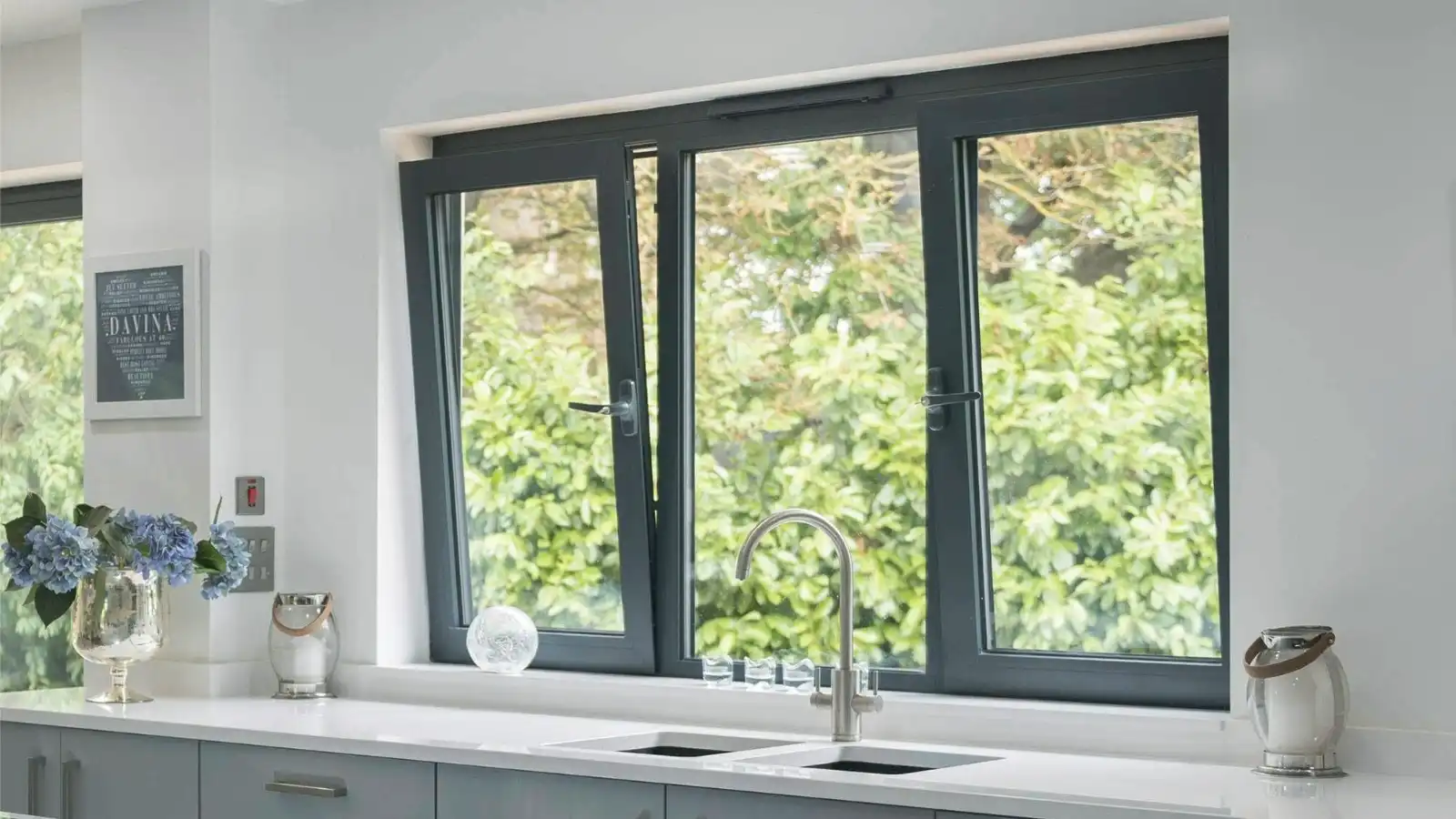
Tilt and turn windows are dual-action windows that can open in two ways: tilting inward from the top for secure ventilation, or turning inward like a door on side hinges for full access and easy cleaning. A single multi-position handle controls both functions. Widely used across Europe for decades, tilt and turn windows are increasingly popular in the UK, particularly for upper-floor apartments, high-rise buildings, and properties where external window cleaning is difficult or dangerous.
At a Glance
Tilt and turn windows are the standard window type across much of continental Europe, from Germany and Austria to Scandinavia and Eastern Europe. In the UK, they have traditionally been a niche choice, but their popularity has grown significantly in recent years as architects, developers, and homeowners recognise their practical advantages. The dual-action opening mechanism provides both secure background ventilation (tilt mode) and full inward opening for cleaning and maximum airflow (turn mode), all controlled by a single handle. This guide explains how tilt and turn windows work, their advantages and disadvantages, costs, energy efficiency, security features, and the situations where they are the best choice for UK homes.
How Tilt and Turn Windows Work
The tilt and turn mechanism is controlled by a single espagnolette handle that operates in three positions. In the closed position (handle pointing downward), the window is fully locked with multi-point locking engaged around the entire perimeter. In the tilt position (handle pointing upward), the window tilts inward from the top edge by approximately 100-150mm, supported by restrictor stays at the sides. This creates a gap at the top for ventilation while the bottom and sides remain securely locked. In the turn position (handle horizontal), the window swings fully inward on side hinges, like an inward-opening casement door. The mechanism uses a perimeter hardware system with corner drives that translate the handle rotation into engagement or disengagement of locking points and hinge pins around all four sides of the sash. Quality tilt and turn hardware from manufacturers like Siegenia, Maco, and Roto is engineered for 20,000+ open/close cycles and is designed to prevent incorrect operation sequences that could cause the sash to drop.
Benefits of Tilt and Turn Windows
The tilt function provides secure ventilation without compromising security. When tilted, the opening is too narrow for an intruder to climb through, making it safe to leave windows open at night or when away from home. This is a significant advantage over casement windows, which must be closed and locked for security. The turn function allows the window to swing fully inward, providing easy access to the exterior glass surface for cleaning from inside the building. This is particularly valuable for upper-floor flats, high-rise apartments, and any window that is difficult or dangerous to clean from the outside. It also makes the window a viable emergency escape route where required by Building Regulations, as the full opening exceeds the minimum 450mm x 450mm escape requirement. Tilt and turn windows have excellent airtightness because the compression seal design presses the sash against weatherseals around the entire perimeter when closed. This results in superior draught exclusion and energy efficiency compared to sliding window types.
Tilt and Turn vs Casement Windows
Casement windows open outward on hinges, while tilt and turn windows open inward with a dual-action mechanism. The key differences are: ventilation security is better with tilt and turn, as the tilt position provides secure ventilation without compromising safety. Casement windows must be closed or use restrictors for security. Cleaning is easier with tilt and turn, as the inward turn action gives full access to the exterior glass. Casement windows require external access for cleaning. Space is different: tilt and turn windows require interior space for the sash to swing inward, which may conflict with blinds, curtains, or furniture near the window. Casement windows require exterior clearance and can obstruct walkways. Cost is comparable, with tilt and turn typically £50-£100 more per window than equivalent casement windows due to the more complex hardware. Weather performance is similar when closed, but casement windows can suffer rain ingress when open in heavy weather, while tilted tilt and turn windows shed rain away from the opening.
Materials and Styles
uPVC tilt and turn windows are the most common and affordable option, with prices from £400 per window. Modern uPVC profiles offer excellent thermal performance, a wide range of colours and finishes, and low maintenance. They are available in both standard and slim-profile designs. Timber tilt and turn windows provide a premium aesthetic with natural warmth and character, priced from £700 per window. They are particularly popular for contemporary architectural projects and eco-builds where natural materials are preferred. Aluminium tilt and turn windows offer the slimmest frame profiles and a distinctly modern appearance, priced from £600 per window. They are commonly specified for commercial buildings and modern residential developments. Tilt and turn windows are available in a wide range of sizes, from small bathroom windows to large floor-to-ceiling panels. They can be combined in multi-light configurations with fixed panels, and some systems offer a tilt-only option for situations where full inward opening is not required.
Energy Efficiency and Building Regulations
Tilt and turn windows offer excellent energy efficiency thanks to their compression seal design. When closed, the sash is pressed firmly against continuous weatherseals around the entire perimeter, creating an airtight seal that minimises heat loss through air leakage. Double-glazed tilt and turn windows achieve U-values of 1.2-1.4 W/m²K, comfortably meeting the Building Regulations requirement of 1.4 W/m²K maximum for replacement windows. Triple-glazed versions can reach 0.8-1.0 W/m²K. The tilt function provides controlled background ventilation without the significant heat loss associated with fully opening a window. In the tilted position, the small opening at the top creates a gentle airflow that refreshes the room without creating draughts or allowing excessive heat escape. This makes tilt and turn windows well suited to the UK's Passivhaus movement, where airtightness is paramount and controlled ventilation is essential.
Security Features
Tilt and turn windows are inherently secure due to their inward-opening design and multi-point locking. When closed, mushroom cam locking points engage around the entire perimeter, making it extremely difficult to force the window from outside. The tilt position adds another layer of security: the window is locked at the bottom and sides, with only a narrow opening at the top that cannot be widened without operating the handle from inside. Key security features include perimeter multi-point locking with 4-8 locking points, mushroom cam locks that resist leverage attacks, key-locking handles to prevent operation by children or intruders reaching through the tilt opening, anti-drill and anti-bump handle cylinders, laminated glass options, and Secured by Design (PAS 24:2022) certification available on many systems. The tilt position is particularly valuable for ground-floor windows, as it allows ventilation while maintaining a level of security that is impossible with outward-opening casement windows.
Common Applications in the UK
Tilt and turn windows are the preferred choice for high-rise residential buildings and upper-floor flats, where outward-opening windows are prohibited by building regulations above certain heights and where window cleaning access is limited. They are increasingly specified for new-build apartment developments across the UK. They are also popular for contemporary house designs where architects want clean lines and inward-opening functionality, for properties facing public footpaths where outward-opening windows would cause an obstruction, for bathrooms and kitchens where secure background ventilation is valuable, and for Passivhaus and low-energy buildings where superior airtightness is critical. In the commercial sector, tilt and turn windows are standard for offices, schools, hospitals, and other institutional buildings, where their combination of security, ventilation, and easy maintenance makes them a practical choice.
Potential Drawbacks to Consider
The main consideration with tilt and turn windows is the interior space required when the sash is fully open in turn mode. The sash swings inward and may conflict with curtains, blinds, or furniture placed near the window. This can be managed by choosing appropriate window treatments (top-mounted roller blinds or shutters work well) and ensuring furniture is not placed directly in front of the window. The hardware for tilt and turn windows is more complex than casement hardware, which can make it more expensive to replace if components fail. However, quality European hardware from brands like Siegenia and Maco is extremely durable and rarely requires replacement within the window's lifespan. Some homeowners unfamiliar with the tilt and turn mechanism may initially find it counterintuitive, but most adapt quickly. The key is to always follow the correct handle sequence: if the handle is between positions, the sash can drop into an incorrect opening mode, though modern hardware includes mishandling devices to prevent this.
Pros and Cons
Advantages
- Dual-action opening provides secure tilt ventilation and full inward-opening access
- Easy cleaning from inside - no ladders or external access needed
- Excellent security in tilt mode with multi-point perimeter locking
- Superior airtightness and energy efficiency from compression seal design
- No external projection when open - ideal for upper floors and footpath-facing windows
Disadvantages
- Requires interior space for the sash to swing inward in turn mode
- May conflict with curtains, blinds, or furniture close to the window
- More complex hardware than casement windows, potentially higher repair costs
- Less traditional appearance may not suit period properties or conservation areas
- Handle sequence can be initially unfamiliar to homeowners used to casement windows
Cost Guide
Tilt and turn window prices in the UK range from £400 to £1,100 per window depending on material, size, and specification. Standard white uPVC tilt and turn windows cost £400-£700 per window fully installed. Coloured uPVC versions cost £500-£800. Timber tilt and turn windows range from £700-£1,100 per window. Aluminium tilt and turn windows cost £600-£1,000. For a full set of tilt and turn windows on a two-bedroom flat (approximately five to seven windows), budget £2,500-£5,000 for uPVC or £4,000-£7,500 for timber or aluminium. Triple glazing adds approximately £100-£200 per window. All prices include VAT, FENSA-registered installation, and disposal of old windows.
Is It Right for Your Home?
Tilt and turn windows are the right choice if you live in a flat or apartment (particularly above ground floor), if you want secure ventilation without compromising safety, or if your windows face a public footpath where outward opening would cause an obstruction. They are also excellent for contemporary house designs and eco-builds focused on airtightness. Tilt and turn windows may not be the best choice for period properties where casement or sash windows are more appropriate, for rooms where interior furniture placement would conflict with the inward opening, or for conservation areas where the style may not be accepted. If your priority is maximum ventilation area at the lowest cost, standard casement windows may be more suitable.
Frequently Asked Questions
Tilt and turn windows open in two ways: tilting inward from the top for secure ventilation, or turning fully inward on side hinges for cleaning and maximum airflow. A single handle controls both functions. They are the standard window type across Europe and increasingly popular in the UK for flats and modern homes.
A single espagnolette handle operates in three positions: down for locked/closed, up for tilt (top opens inward ~150mm), and horizontal for turn (full inward opening on side hinges). Corner-drive hardware around the perimeter translates the handle rotation into locking or releasing different points for each mode.
uPVC tilt and turn windows cost £400-£700 per window installed. Timber versions cost £700-£1,100 and aluminium £600-£1,000. A full set for a two-bedroom flat costs approximately £2,500-£5,000 in uPVC. They cost roughly £50-£100 more than equivalent casement windows due to the more complex hardware.
Yes, very secure. When closed, multi-point mushroom cam locks engage around the entire perimeter. In tilt mode, the window is locked at the bottom and sides with only a narrow top opening. Many systems achieve PAS 24:2022 and Secured by Design accreditation. The tilt position allows safe ventilation even when away from home.
Yes, the tilt position is designed for exactly this purpose. When tilted, the narrow opening (approximately 100-150mm) at the top provides ventilation while the bottom and sides remain locked. The opening is too narrow for an intruder to climb through. Always use the tilt position, not the full turn position, for overnight ventilation.
Excellent. They are the preferred choice for flats because the tilt provides secure ventilation for upper floors, the inward turn allows easy cleaning without external access, no part projects externally (important above ground floor), and they meet Building Regulations for emergency escape in turn mode.
No, both the tilt and turn functions open inward. This means no external projection, but the sash does swing into the room when in turn mode. You need to ensure there is adequate interior clearance for the sash and that curtains or blinds do not obstruct the opening.
Casement windows swing outward on hinges with a single opening action. Tilt and turn windows open inward with a dual-action mechanism (tilt from top or turn on side hinges). Tilt and turn offer better security ventilation and easier cleaning but require interior space and cost slightly more.
Tilt and turn windows are generally not appropriate for conservation areas where the original windows were casement or sash types. Conservation officers typically require replacements that match the original style. In rare cases where the original windows were already tilt and turn (some 1960s-70s buildings), they may be acceptable.
A dropping sash usually means the handle was turned while the window was partially open, engaging an incorrect opening mode. Close the window fully, press the sash against the frame, and turn the handle to the correct position. If the problem persists, the corner drive hardware may need adjustment by a window engineer.
Ready to Get Started?
Get a free, no-obligation quote for your window project. Our experts will help you choose the perfect windows.