
.svg)

Timber vs Aluminium Windows: Complete UK Comparison Guide
Our Verdict
Timber windows are the best choice for period properties, conservation areas, and homeowners who value natural beauty and sustainability, while aluminium windows excel in contemporary architecture with their slim profiles, structural strength, and virtually maintenance-free performance. Both are premium materials that significantly outperform uPVC in aesthetics and longevity, making this a choice between traditional warmth and modern precision.
At a Glance
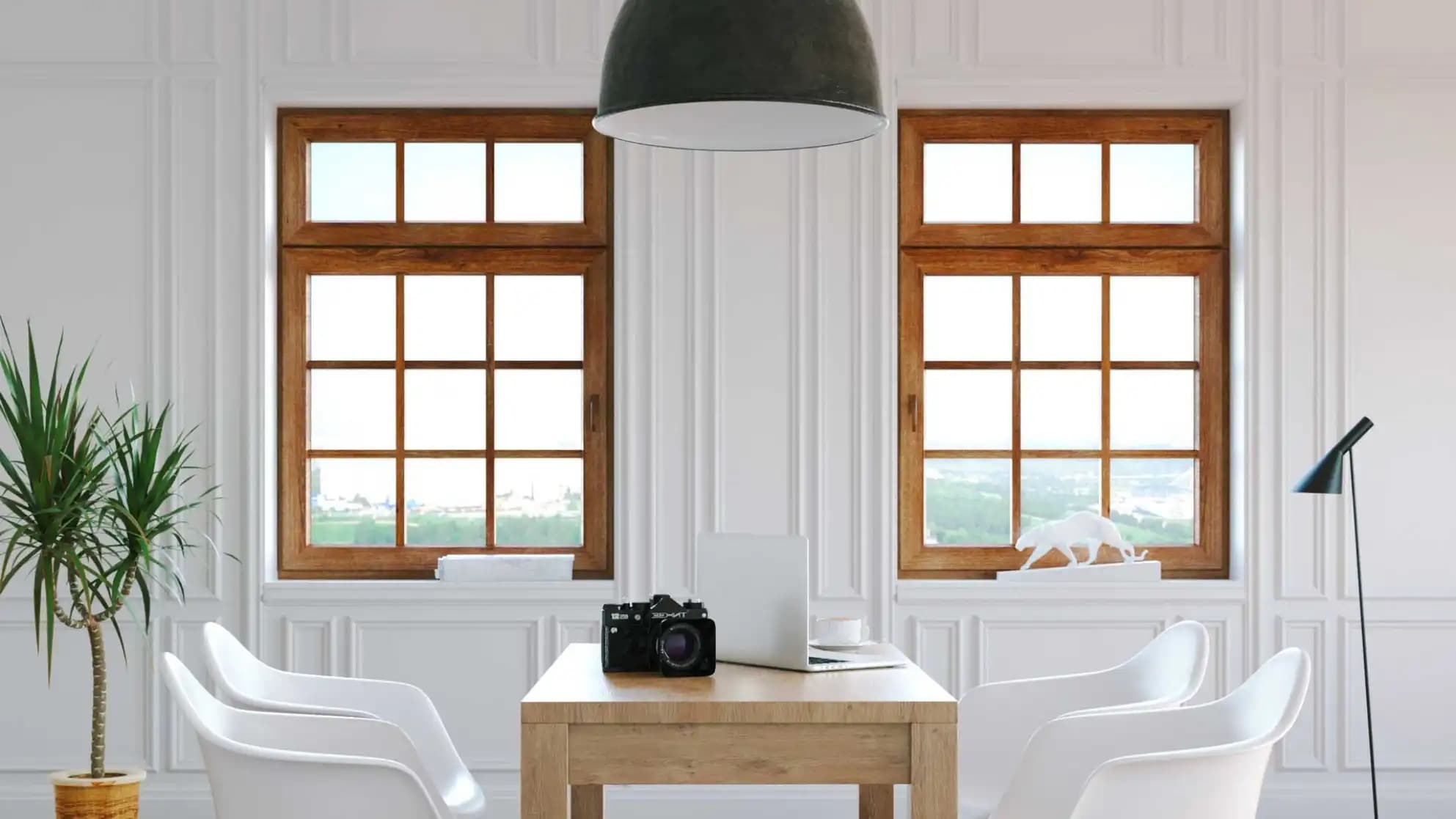
Timber Windows
Key Specs
- U-value from 1.3 W/m²K (double glazed)
- 60-100+ year lifespan with maintenance
- Natural insulator — no thermal bridging
- FSC/PEFC certified sustainable sourcing

Aluminium Windows
Key Specs
- U-value from 1.3 W/m²K (with thermal break)
- 30-45 year lifespan
- Slim profiles from 35mm
- 100% infinitely recyclable
Detailed Comparison
| Feature | Timber Windows | Aluminium Windows |
|---|---|---|
| Average Cost (supply & fit) | £800-£2,800 | £600-£1,400 |
| Energy Efficiency (U-value) | From 1.3 W/m²K | From 1.3 W/m²K |
| Frame Sightline Width | 55-75mm | 35-55mm |
| Maintenance Required | High (repainting every 3-7 years) | Very Low (occasional cleaning) |
| Lifespan | 60-100+ years | 30-45 years |
| Structural Strength | Excellent | Excellent |
| Maximum Span Width | Up to 1.5m | Up to 1.8m |
| Colour Options | Unlimited (any paint colour) | Unlimited (RAL powder coat) |
| Conservation Area Suitability | Excellent — typically required | Limited — modern appearance |
| Repair Capability | Excellent (splice repairs possible) | Limited (component replacement) |
| Weight | Heavy | Light |
| Environmental Impact | Very Low (renewable, carbon-storing) | Moderate (energy-intensive production, but recyclable) |
| Noise Reduction | Very Good (up to 38dB) | Good (up to 35dB) |
| Condensation Risk | Low (timber absorbs minor moisture) | Low (with thermal break) |
Choose Timber Windows If...
- Your property is listed or in a conservation area where timber is required by planning regulations
- You value the natural beauty, warmth, and character of real wood in your home
- Maximum lifespan is important — you want windows that could last 60-100+ years with proper care
- Environmental sustainability and carbon storage are key decision factors for you
- You want the ability to repair rather than replace damaged windows in the future
- Your property is a period home where the authenticity of natural timber contributes to its character and value
Choose Aluminium Windows If...
- You want a contemporary, minimalist aesthetic with the slimmest possible frame profiles
- Low maintenance is a priority — you do not want to repaint window frames every few years
- Your project involves large spans of glazing, floor-to-ceiling windows, or modern architectural features
- You are building a modern extension or new-build home with a contemporary design language
- You want consistent, factory-applied colour finishes that will not fade for 25+ years
- Budget is a consideration — aluminium is typically 20-40% cheaper than equivalent timber specifications
Cost Comparison
Timber windows are generally more expensive than aluminium, though there is overlap in the mid-range. A standard double-glazed softwood timber casement window costs £800-£1,500 installed, while hardwood (oak or sapele) costs £1,200-£2,800. Equivalent aluminium windows cost £600-£1,400. For a full house of windows in a three-bedroom semi (8-10 windows), softwood timber costs approximately £8,000-£15,000, hardwood timber £12,000-£25,000, and aluminium £7,000-£13,000. Timber-aluminium composite windows are the most expensive option at £12,000-£30,000 for a full house. When factoring in maintenance, timber's ongoing costs are significant: approximately £4,000-£7,000 over a 40-year period for professional repainting. Aluminium has no such ongoing cost. However, timber's superior lifespan means that over 60-80 years, you may only need one set of timber windows versus two sets of aluminium, potentially making timber more cost-effective in the very long term. All prices include VAT at 20% and professional installation.
Frequently Asked Questions
Timber is almost always the better choice for period properties. It matches the original material, satisfies conservation and planning requirements, and contributes to the property's character and value. Aluminium, while available in traditional styles, has a distinctly modern appearance that rarely suits pre-1930s architecture. The only exception might be a period property with a contemporary rear extension, where aluminium could complement a modern design.
For period properties and high-end homes, yes. Timber windows add genuine value to a property, particularly in desirable areas and conservation zones. The 60-100+ year lifespan, superior aesthetics, repairability, and sustainability credentials justify the premium for the right property. For modern homes where the architectural benefit is less clear, aluminium may offer better value.
Absolutely yes. Without a thermal break, aluminium windows will conduct heat rapidly, causing cold inner frames, condensation, and poor energy performance. All quality modern aluminium windows feature a polyamide thermal break that separates the inner and outer frame faces. Always confirm that a thermal break is included, particularly when considering budget aluminium options. Windows without a thermal break will not meet Building Regulations Part L.
Accoya is acetylated radiata pine — softwood that has been modified through a non-toxic chemical process that dramatically improves its durability and stability. Accoya windows have a 50-year above-ground guarantee, are dimensionally stable (minimal swelling/shrinking), and need repainting less frequently than standard softwood. At 15-25% more than standard softwood, Accoya is an excellent investment for timber windows, offering near-hardwood performance at a lower price point.
Aluminium windows can incorporate traditional features like Georgian bars, cottage-style astragal bars, and period-appropriate hardware. Some manufacturers (such as Steel Window Alternatives and Crittall) specialise in heritage-style aluminium that replicates traditional steel and iron windows. However, the profiles remain distinctly modern in character and close inspection reveals the difference. For genuine period authenticity, timber remains the superior choice.
For painted softwood windows, engineered Scandinavian redwood (Scots pine) is the industry standard — stable, affordable, and durable when properly maintained. For natural/stained finishes, European oak offers the best appearance and durability. For a premium all-round performance, Accoya (acetylated softwood) provides exceptional stability and longevity. Sapele hardwood is also popular for its balance of cost and durability. Always ensure timber is FSC or PEFC certified.
Composite windows combine a timber interior with an aluminium exterior. They offer the warmth and character of wood inside, the weather resistance and zero maintenance of aluminium outside, and excellent thermal performance. They typically cost 20-40% more than timber-only windows but eliminate external repainting entirely. Leading brands include Rationel, Nordan, and Internorm. They are increasingly popular for eco-homes and high-specification projects.
Timber windows typically offer slightly better acoustic performance than aluminium due to the density and mass of the wood frame, which helps absorb sound vibrations. A timber frame can contribute an additional 2-3dB of noise reduction compared to aluminium. However, the glazing specification has a much greater impact on acoustic performance than the frame material. Acoustic laminated glass and wider cavity double glazing will provide significant noise reduction with either frame material.
Standard powder-coated aluminium can corrode in marine environments due to salt spray. For properties within 5km of the coast, marine-grade powder coating should be specified, which uses an enhanced polyester or PVDF finish system that resists salt corrosion. This typically adds 10-15% to the cost. Annual washing with fresh water is also recommended for coastal properties. Qualicoat Seaside certification is the standard to look for.
For period properties, timber windows add more value — they maintain the architectural integrity that buyers of period homes expect. For modern and contemporary properties, high-quality aluminium windows can add significant value as they signal a premium specification. In both cases, the quality of the installation and the condition of the windows matters more than the material alone. Well-maintained timber or clean, modern aluminium both enhance a property's appeal.
Need Help Choosing?
Our window specialists can help you choose the right windows for your property. Get a free, no-obligation consultation.