
.svg)


uPVC vs Aluminium Windows: Complete UK Comparison Guide
Our Verdict
uPVC windows are the best choice for budget-conscious homeowners who want good thermal performance and minimal maintenance, while aluminium windows are ideal for those seeking slim sightlines, contemporary aesthetics, and superior structural strength. For most UK homeowners, uPVC offers the best value for money, but aluminium is increasingly popular for modern homes, extensions, and large glazed openings where strength and style matter most.
At a Glance
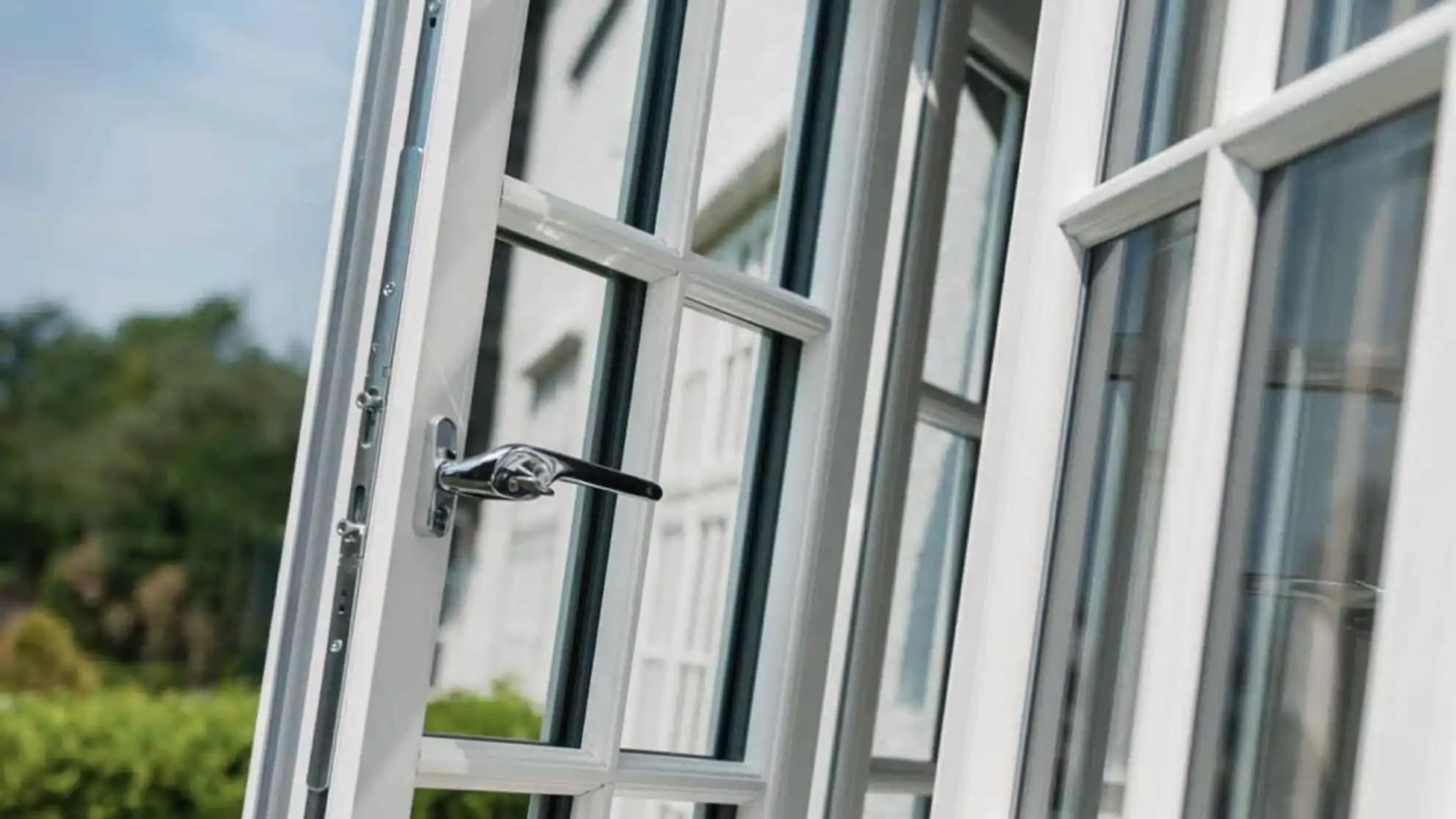
uPVC Windows
Key Specs
- U-value from 1.2 W/m²K (double glazed)
- Multi-chambered profiles for insulation
- Available in 40+ colour and woodgrain finishes
- 70-80mm frame depth typical

Aluminium Windows
Key Specs
- U-value from 1.3 W/m²K (with thermal break)
- Slim profiles as narrow as 35mm
- RAL colour matching (unlimited colours)
- Inherent structural strength
Detailed Comparison
| Feature | uPVC Windows | Aluminium Windows |
|---|---|---|
| Average Cost (supply & fit) | £350-£800 | £600-£1,400 |
| Energy Efficiency (U-value) | From 1.2 W/m²K | From 1.3 W/m²K |
| Frame Thickness | 70-80mm (thicker) | 35-55mm (slimmer) |
| Glass Area (light) | Good | Excellent (more glass, less frame) |
| Structural Strength | Good | Excellent |
| Maximum Span Width | Up to 1.2m unsupported | Up to 1.8m unsupported |
| Colour Options | 40+ foil finishes | Unlimited RAL colours |
| Maintenance Required | Very Low | Very Low |
| Lifespan | 20-30 years | 30-45 years |
| Recyclability | Recyclable (up to 10 times) | 100% infinitely recyclable |
| Condensation Risk | Low | Low (with thermal break) |
| Security (standard) | PAS 24 compliant | PAS 24 compliant |
| Weather Resistance | Excellent | Excellent |
| Colour Fade Resistance | Good (foils may fade over 15+ years) | Excellent (powder coat lasts 25+ years) |
Choose uPVC Windows If...
- You want the best value for money with the lowest upfront cost for window replacement
- Maximum thermal efficiency is your top priority and you want the best U-values without triple glazing
- You prefer a traditional or understated window appearance with woodgrain or classic white finish
- Budget is limited — uPVC windows cost 40-50% less than equivalent aluminium options
- Your windows are standard residential sizes and you do not need to span large openings
- You want a FENSA-registered installation that is quick, straightforward, and cost-effective
Choose Aluminium Windows If...
- You want a contemporary, minimalist aesthetic with slim sightlines and maximum glass area
- Your project involves large openings, floor-to-ceiling windows, or wide-span glazing
- You want unlimited colour choice with the option of different colours inside and outside
- Maximum lifespan and long-term durability are important to you
- Environmental sustainability and recyclability are key considerations
- You are building a modern extension or new-build home and want to achieve an architectural look
Cost Comparison
uPVC windows are significantly more affordable than aluminium. For a standard double-glazed casement window (1200mm x 1200mm), expect to pay £350-£600 for uPVC versus £600-£1,000 for aluminium, including installation. For a full house of windows in a three-bedroom semi-detached property (8-10 windows), uPVC will cost approximately £4,000-£7,000 while aluminium will cost £7,000-£13,000. The premium for aluminium ranges from 50-100% depending on specification, colour, and manufacturer. However, aluminium windows last 10-15 years longer on average, which narrows the cost gap over the lifetime of the windows. When calculating cost per year of service, uPVC works out at approximately £15-£30 per window per year, while aluminium costs £15-£35 per window per year — making the long-term value proposition much closer than the upfront prices suggest. Triple glazing adds approximately £100-£200 per window to either material. All prices include VAT at 20% and professional FENSA-registered installation.
Frequently Asked Questions
Not with modern thermal break technology. Today's aluminium windows feature a polyamide thermal barrier between the inner and outer frame faces, which prevents cold bridging and achieves U-values very close to uPVC (1.3 W/m²K vs 1.2 W/m²K). The days of cold, dripping aluminium frames are long gone. Always ensure your aluminium windows have a proper thermal break — avoid cheap imports without this feature.
Aluminium windows typically last 30-45 years compared to 20-30 years for uPVC. Aluminium does not degrade from UV exposure in the same way that uPVC can become brittle and discolour over time. The powder-coated finish on aluminium maintains its appearance for 25+ years, while uPVC foil finishes may begin to fade or peel after 15-20 years, particularly on south-facing elevations.
Yes, aluminium windows are available in traditional styles including Georgian bar designs, cottage-style configurations, and even sash window styles. However, the slim sightlines that are aluminium's main aesthetic advantage are most apparent in contemporary designs. If you want a traditional look, uPVC with woodgrain foils often provides a more convincing period appearance at a lower cost.
Not if they have a proper thermal break. Modern thermally broken aluminium windows have similar condensation resistance to uPVC. Condensation is primarily caused by high indoor humidity and poor ventilation rather than the frame material. If you experience condensation, improving ventilation through trickle vents (now mandatory under Building Regulations Part F) or extractor fans is more effective than changing window materials.
uPVC windows have improved their environmental credentials significantly. Modern uPVC is recyclable up to 10 times, and industry recycling schemes like Recovinyl aim to recycle all end-of-life uPVC windows. However, aluminium has the edge in sustainability as it is 100% infinitely recyclable with no loss of quality. uPVC production involves chlorine chemistry, which has environmental concerns, though the industry has worked to minimise its impact.
Yes, this is increasingly common. Many homeowners use aluminium windows for feature areas such as large rear glazing, extensions, or bi-fold doors, while using uPVC for standard bedroom and bathroom windows to manage costs. The key is to ensure consistent sightlines and colour matching. Some manufacturers offer uPVC and aluminium ranges in matching colours to facilitate this approach.
Both materials offer excellent security when specified correctly. Both can be manufactured to PAS 24:2022 standards and achieve Secured by Design accreditation. Aluminium's inherent strength makes the frames slightly harder to force, but the locking mechanisms and glass specification are more important security factors than the frame material. Always look for PAS 24 certification regardless of which material you choose.
In most cases, no. Window replacements are generally covered by permitted development rights, provided you use materials of similar appearance (which planning authorities interpret broadly for non-listed properties outside conservation areas). In conservation areas, changing the material or appearance of your windows may require planning permission. For listed buildings, listed building consent is always required for any window changes.
Aluminium windows can be professionally re-sprayed, though it is not a DIY job. Professional re-spraying costs approximately £100-£200 per window and involves careful preparation and application of a specialist powder-coat or wet-spray finish. uPVC windows can also be sprayed but the finish is less durable. Alternatively, aluminium window profiles can be factory-refurbished and re-coated, though this requires removal from the property.
uPVC windows typically have a shorter lead time of 2-4 weeks from order to installation, as they are manufactured in high volume. Aluminium windows usually take 4-8 weeks, as they often involve bespoke fabrication and powder coating to a specified RAL colour. Custom colours or dual-colour finishes may add an extra 1-2 weeks to the lead time.
Need Help Choosing?
Our window specialists can help you choose the right windows for your property. Get a free, no-obligation consultation.