
.svg)

Flush Sash vs Traditional Sash Windows: Complete UK Comparison Guide
Our Verdict
Traditional sash windows are the authentic choice for listed buildings and the strictest conservation areas where original materials and mechanisms are required, while flush sash windows offer a remarkably convincing period appearance in modern uPVC at a fraction of the cost and maintenance. For most homeowners seeking a sash window aesthetic without the premium price or upkeep of timber, flush sash uPVC windows represent the best value proposition in the UK market today.
At a Glance
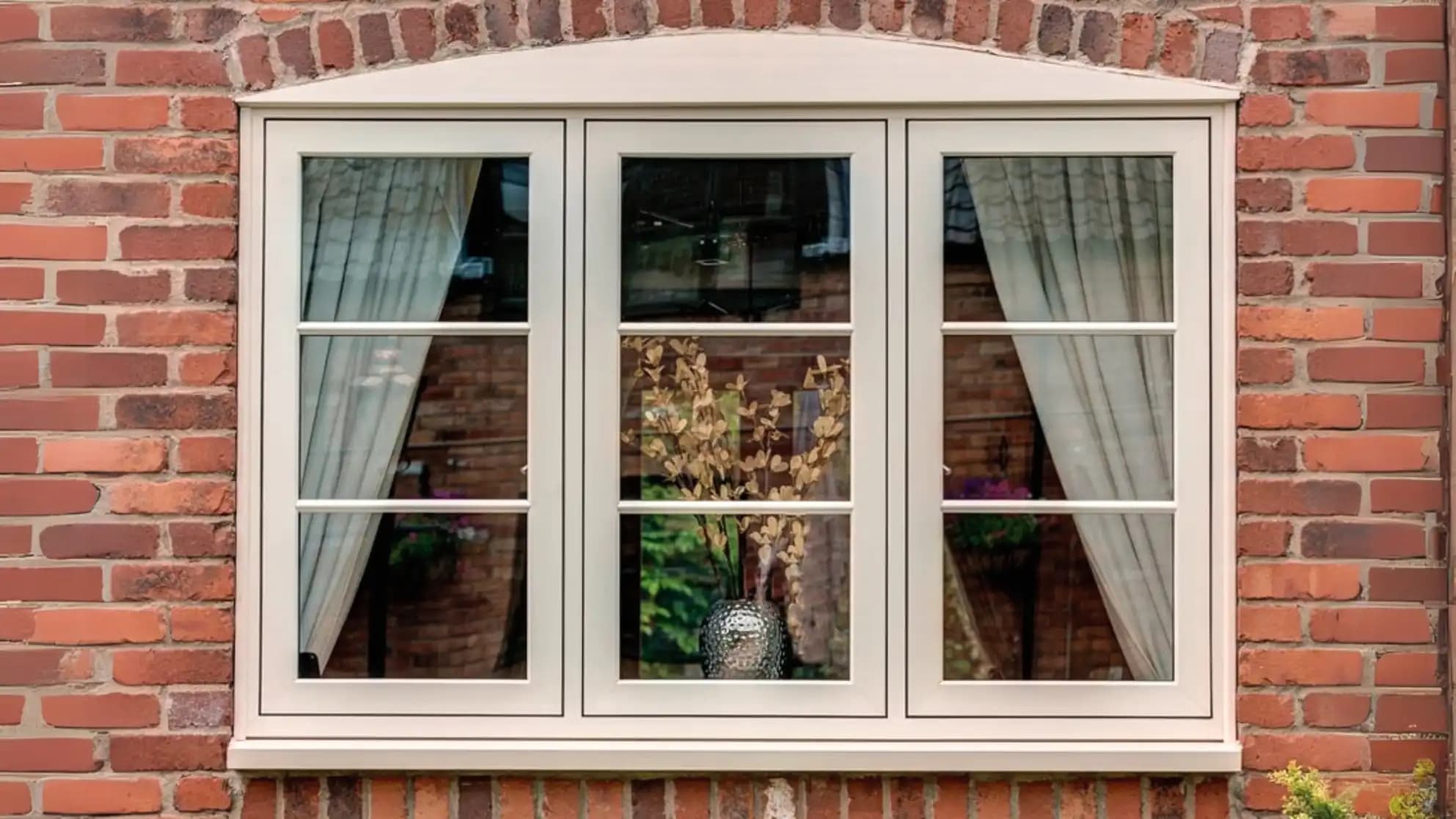
Flush Sash Windows
Key Specs
- U-value from 1.2 W/m²K (double glazed)
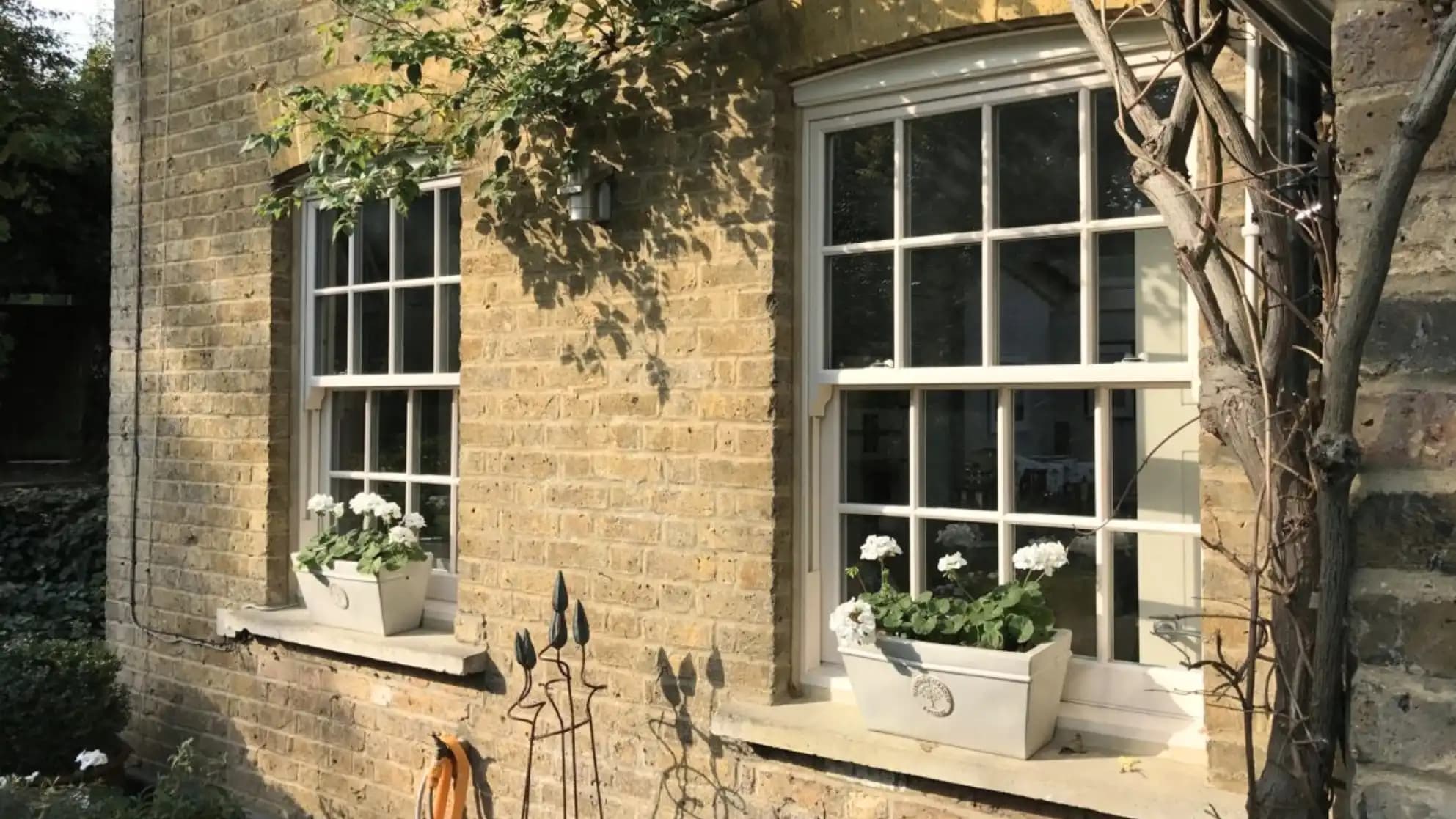
- Flush fitting sash sits level with outer frame
- Mechanically jointed corners for authentic look
- Run-through sash horns as standard
Traditional Sash Windows
Key Specs
- U-value from 1.4 W/m²K (double glazed timber)
- Authentic cord, weight, and pulley mechanism available
- Traditional timber joinery construction
- Genuine period proportions and profiles
Detailed Comparison
| Feature | Flush Sash Windows | Traditional Sash Windows |
|---|---|---|
| Average Cost (supply & fit) | £500-£1,000 | £600-£2,800 |
| Energy Efficiency (U-value) | From 1.2 W/m²K | From 1.4 W/m²K |
| Visual Authenticity | Very Good (convincing at distance) | Excellent (genuine period construction) |
| Maintenance Required | Very Low | Moderate to High (timber) |
| Conservation Area Acceptance | Good (many councils accept) | Excellent (universally accepted) |
| Listed Building Suitability | Rarely accepted | Required in most cases |
| Frame Material | Primarily uPVC | Timber (softwood or hardwood) |
| Corner Joint Type | Mechanical (authentic appearance) | Traditional mortise and tenon |
| Sash Horns | Run-through horns (cosmetic) | Genuine structural horns |
| Glazing Bar Options | Plant-on or integral Georgian bars | Genuine timber astragal bars |
| Lifespan | 25-35 years | 60-100+ years (timber) |
| Draught Performance | Excellent (modern seals) | Good to Excellent (depends on specification) |
| Security | PAS 24 compliant | PAS 24 available (at extra cost) |
| Colour Stability | Good (foil finishes) | Requires repainting to maintain |
Choose Flush Sash Windows If...
- You want the sash window aesthetic without the cost and maintenance of timber
- Your property is in a conservation area where flush sash uPVC windows are accepted by the local planning authority
- Budget is a significant factor and you want to maximise the number of windows you can replace
- Low maintenance is a priority — you do not want to repaint window frames every few years
- Maximum energy efficiency matters and you want the best available U-values in a sash-style window
- You are a landlord or developer needing period-appropriate windows at a commercial price point
Choose Traditional Sash Windows If...
- Your property is a listed building where genuine timber sash windows are required for consent
- Your conservation area has a strict timber-only policy for window replacements
- You value the authentic craftsmanship, materials, and character of traditional timber joinery
- Long-term durability matters — you want windows that can last 60-100+ years with maintenance
- You prefer the ability to repair and refurbish windows rather than replace them entirely
- Your property is a high-value period home where genuine timber windows contribute to its character and market value
Cost Comparison
Flush sash uPVC windows cost approximately 40-65% less than traditional timber sash windows. For a standard window (1200mm x 1200mm), flush sash uPVC costs £500-£1,000 installed versus £600-£1,500 for basic timber or £1,200-£2,800 for premium timber. For a typical Victorian terraced house with 6-8 sash windows, flush sash uPVC would cost £4,000-£8,000 while traditional timber would cost £5,000-£10,000 for basic softwood or £10,000-£22,000 for hardwood. When factoring in 30 years of maintenance, timber adds approximately £2,500-£5,000 to the total for the house, while uPVC adds virtually nothing. However, after 30 years you will likely need to replace the uPVC flush sash windows (another £4,000-£8,000), while the timber windows should still be going strong with continued maintenance. The break-even point where timber becomes more cost-effective than uPVC is approximately 35-40 years, assuming consistent maintenance. All prices include VAT at 20% and professional installation by a FENSA-registered installer.
Frequently Asked Questions
This varies significantly by local authority. Many UK councils now accept high-quality flush sash uPVC windows for unlisted buildings in conservation areas, provided they meet specific criteria: flush external profile, run-through horns, mechanical corner joints, slim sightlines, and appropriate glazing bar patterns. However, some councils maintain strict timber-only policies. Always contact your local conservation officer before ordering. Ask for their specific window replacement guidance and, if possible, get pre-application advice in writing.
The key difference is the profile: flush sash windows have the sash sitting level with the outer frame (flush), while standard uPVC sash windows have the sash sitting proud of the frame. Flush sash windows also typically feature: mechanically jointed corners instead of welded corners, run-through sash horns, slimmer sightlines, deeper bottom rails for more authentic proportions, and period-style hardware. These details combine to create a much more convincing traditional appearance.
In the vast majority of cases, no. Listed building consent almost always requires genuine timber sash windows that match the originals in material, profile, construction, and operation. Even the most convincing flush sash uPVC windows are unlikely to be approved for a listed building. There may be rare exceptions for Grade II listed buildings with unsympathetic modern alterations, but always seek specialist advice from a heritage architect and your local conservation officer before proceeding.
On traditional sash windows, sash horns are a structural feature — they are an extension of the stile that strengthened the joint when sash windows transitioned from single large panes to multiple smaller panes. On flush sash uPVC windows, the horns are cosmetic run-through features that replicate the appearance but serve no structural purpose. From the street, both look similar, but close inspection reveals the difference: genuine timber horns show grain continuity and natural joinery, while uPVC horns are moulded components.
Yes, most flush sash windows feature a tilt-in facility that allows both the upper and lower sashes to be tilted inward for safe, easy cleaning from inside the room. This is actually an advantage over traditional sash windows, which require external access for cleaning unless they have been retrofitted with a tilt-in mechanism (which is less common on traditional timber designs).
Flush sash uPVC windows typically last 25-35 years before requiring replacement. Traditional timber sash windows, when properly maintained with regular repainting and timely repairs, can last 60-100+ years. Many original Victorian sash windows from the 1860s-1890s are still in service today. This significant lifespan difference is one of the key arguments for choosing timber, particularly on high-value properties where long-term investment makes sense.
Flush sash uPVC windows are generally more secure than traditional sash windows. They come fitted with modern multi-point locking mechanisms as standard and are typically PAS 24:2022 compliant. Traditional sash windows can be made secure with modern hardware (sash locks, Brighton fasteners, sash stops), but require additional specification to match the out-of-the-box security level of uPVC flush sash windows.
This is occasionally done, typically with flush sash uPVC on the rear elevation (where they are less visible) and traditional timber on the front. However, this approach carries risks: the subtle differences in profile and finish can be noticeable where the two types meet at a corner, and conservation officers may not approve mixed specifications. If budget requires a phased approach, replacing all windows on one elevation at a time with the same type is generally more successful visually.
Flush sash windows offer several glazing bar options: plant-on bars (attached to the glass surface externally and internally to simulate individual panes), integral bars (spacer bars within the double glazing unit combined with plant-on bars for a more convincing effect), and astragal bars (bonded to the glass to replicate traditional astragal mouldings). For the most authentic appearance, integral bars combined with external plant-on astragals are recommended. True divided-light glazing (individual panes) is available only in timber sash windows.
Yes, flush sash windows are available in a range of woodgrain foil finishes including Irish Oak, Golden Oak, Rosewood, and Cream Woodgrain, as well as smooth colours like White, Anthracite Grey, and Black. The woodgrain foils add to the traditional appearance and are increasingly realistic. However, they may fade or peel after 15-20 years, particularly on south-facing elevations. For the most authentic look, a White or Cream smooth finish often looks more convincing than woodgrain, as many original sash windows were painted in these colours.
Need Help Choosing?
Our window specialists can help you choose the right windows for your property. Get a free, no-obligation consultation.