
.svg)

Sash vs Tilt & Turn Windows: Complete UK Comparison Guide
Our Verdict
Sash windows are the definitive choice for period properties and conservation areas where heritage aesthetics and planning compliance are non-negotiable, while tilt and turn windows offer superior functionality, security, and energy efficiency for modern homes. If your property was built before 1930, sash windows almost certainly suit it best; for everything from 1960s semis to new-build apartments, tilt and turn windows provide a smarter, more versatile solution.
At a Glance
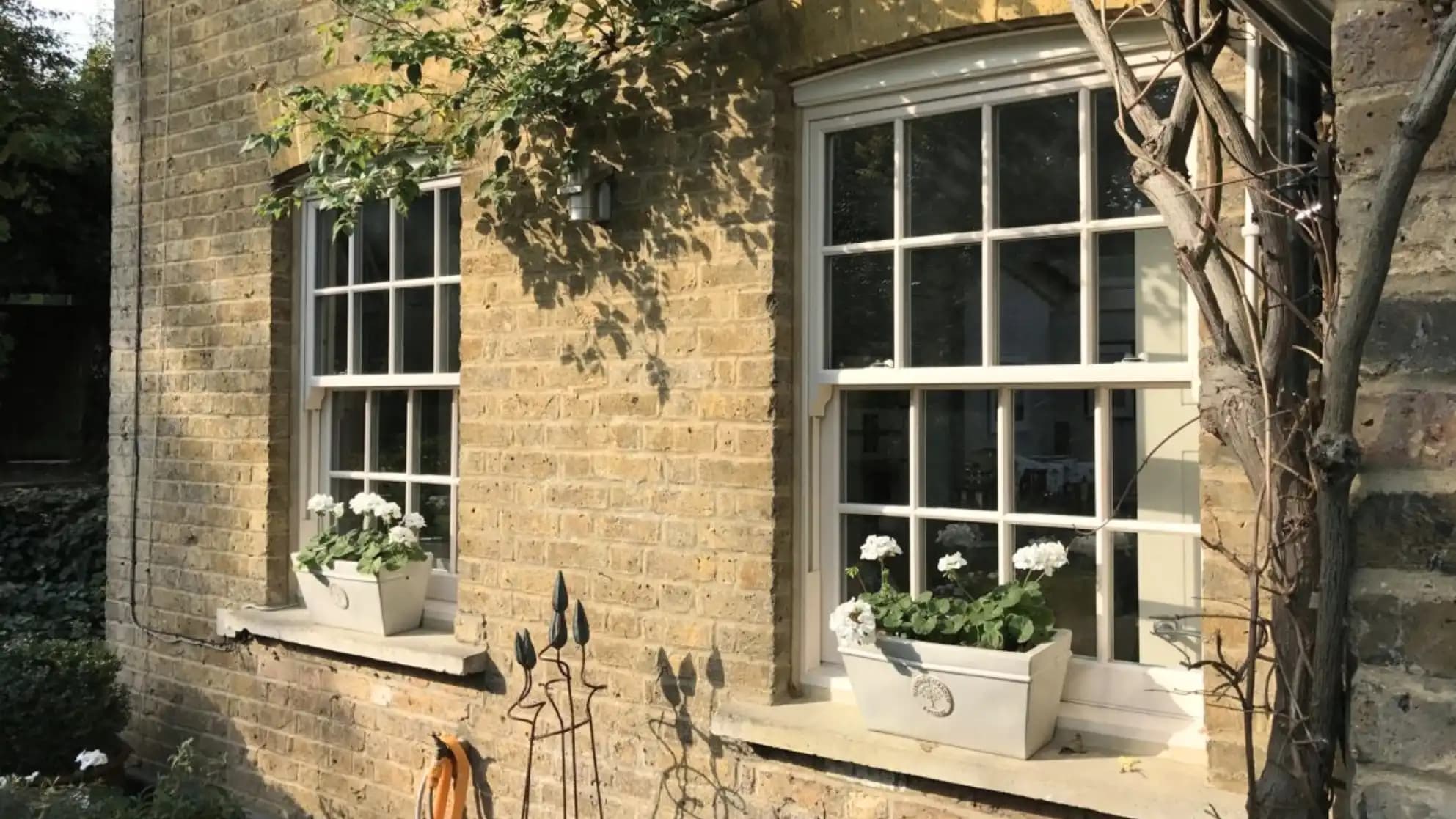
Sash Windows
Key Specs
- U-value from 1.4 W/m²K (double glazed)
- Vertical sliding operation
- Available in timber, uPVC, and aluminium
- Natural stack ventilation via dual sash opening
_6_11zon.webp&w=2048&q=75)
Tilt & Turn Windows
Key Specs
- U-value from 1.1 W/m²K (double glazed)
- Dual-function tilt and turn operation
- Multi-point locking as standard
- Inward opening for safe cleaning from inside
Detailed Comparison
| Feature | Sash Windows | Tilt & Turn Windows |
|---|---|---|
| Average Cost (supply & fit) | £600-£2,800 | £500-£1,100 |
| Energy Efficiency (U-value) | From 1.4 W/m²K | From 1.1 W/m²K |
| Ventilation Versatility | Excellent (dual sash stack ventilation) | Excellent (tilt for draught-free, turn for maximum) |
| Security Rating | Good (with modern hardware) | Excellent (multi-point locking standard) |
| Cleaning Ease | Moderate (tilt-in option on modern versions) | Excellent (fully opens inward) |
| Draught Resistance | Good (brush seals) | Excellent (compression gasket seals) |
| Maximum Opening Area | Up to 50% of frame | Up to 100% in turn mode |
| Fire Escape Compliance | Yes (with sufficient opening) | Yes (turn mode provides full opening) |
| Child Safety | Moderate (restrictors available) | Excellent (tilt mode is inherently safe) |
| Noise Reduction | Good (up to 34dB) | Very Good (up to 37dB) |
| Period Authenticity | Excellent | None (distinctly modern) |
| Rain Protection While Open | Limited | Excellent (in tilt mode) |
| Suitable for Upper Floors | Yes (with safety features) | Excellent (tilt mode ideal for high-rise) |
| Available Materials | Timber, uPVC, aluminium | uPVC, aluminium, timber |
Choose Sash Windows If...
- Your property is a period home (Georgian, Victorian, Edwardian) where sash windows are the architecturally correct choice
- You live in a conservation area or have a listed building where sash windows are required by planning conditions
- You want the natural stack ventilation that only dual-sash operation can provide
- Maintaining the character, heritage, and value of a traditional property is important to you
- Your existing window openings are designed for sash windows and would need significant modification for tilt and turn
- You prefer the classic British aesthetic and are willing to pay a premium for it
Choose Tilt & Turn Windows If...
- You live in a modern property, apartment, or flat where tilt and turn windows are the appropriate style
- Easy cleaning from inside is important, particularly for upper-floor windows
- Maximum energy efficiency and draught resistance are top priorities
- Security is a key concern — you want multi-point locking and safe ventilation through tilt mode
- You need child-safe ventilation options for bedrooms and nurseries
- You want the best available thermal performance to minimise heating bills
Cost Comparison
Tilt and turn windows are generally more affordable than sash windows, particularly compared to timber sash options. A standard double-glazed uPVC tilt and turn window (1200mm x 1200mm) costs £500-£800 installed, while an equivalent uPVC sash window costs £600-£1,200. Timber sash windows are considerably more expensive at £1,000-£2,800, while timber tilt and turn windows (which are less common in the UK) cost £800-£1,500. For a full house of windows in a three-bedroom property (8-10 windows), uPVC tilt and turn windows cost approximately £5,000-£8,000 versus £6,000-£12,000 for uPVC sash windows, or £10,000-£25,000 for timber sash windows. The energy efficiency advantage of tilt and turn windows also translates to lower heating costs — approximately £30-£60 per year savings compared to sash windows for an average UK home. Over a 25-year period, this amounts to £750-£1,500 in cumulative savings. All prices include VAT at 20% and professional FENSA-registered installation.
Frequently Asked Questions
In most cases outside conservation areas, yes, as window replacement is covered by permitted development rights. However, you should check with your local planning authority, particularly if your property has any heritage designation. Be aware that replacing sash windows with tilt and turn windows on a period property can look incongruous and may reduce the property's value and architectural character.
Yes. Tilt and turn windows achieve better U-values (from 1.1 W/m²K vs 1.4 W/m²K for sash) due to their compression gasket seals and deeper frame profiles that accommodate wider glazing units. The perimeter seal compression creates superior airtightness compared to the brush seals used on sliding sash mechanisms. In practice, this translates to approximately £30-£60 per year in heating cost savings for an average home.
Yes. In turn mode, tilt and turn windows provide a clear opening that meets Building Regulations Approved Document B requirements for means of escape. The opening typically exceeds the minimum requirement of 450mm x 450mm with at least 0.33m² clear opening area. In fact, the inward opening of tilt and turn windows can make escape easier than through a sash window, as there is no frame obstruction.
Yes, though you should consider that in turn mode, the sash opens inward and therefore requires clear space inside the room. This can be an issue if furniture, blinds, or curtains are positioned close to the window. In tilt mode, the inward projection is only 10-15cm and rarely causes an issue. Ground floor tilt and turn windows offer excellent security due to their multi-point locking mechanism.
Yes, but the blinds need to be compatible with the inward-opening mechanism. Integral blinds (enclosed within the double glazing unit) are ideal as they do not interfere with the opening action. External or roller blinds mounted above the window also work well. Standard Venetian or Roman blinds mounted inside the reveal will need to be moved before using the turn function, though they are compatible with tilt mode.
On period properties (pre-1930s), yes — they look distinctly modern and can detract from the architectural character. On post-war homes, apartments, and contemporary properties, they look perfectly appropriate and are increasingly common. In many European countries, tilt and turn windows are the standard residential window type, and their popularity in the UK is growing, particularly in new-build developments and modern architectural projects.
In tilt mode, the window top tilts inward while the bottom remains sealed, creating a natural rain shield. Light to moderate rain will not enter the room when the window is in tilt mode, making it possible to leave windows open for ventilation in typical British weather. This is a significant advantage over sash windows, which can allow rain in when either sash is open.
Modern sash windows with proper brush seals and draught strips are far less draughty than old, un-refurbished windows. However, they cannot match the airtightness of tilt and turn windows due to the inherent gap between the sliding sashes. If your existing sash windows are draughty, refurbishment with new seals can significantly improve comfort at a fraction of the cost of full replacement — typically £150-£350 per window.
Tilt mode provides ventilation through a narrow opening at the top of the window that children cannot climb through, making it inherently safe for nurseries, children's bedrooms, and upper floors. The handle can be locked in the tilt position with a key-operated handle or lockable window restrictor. This meets Building Regulations Approved Document K requirements for safety and is one of the reasons tilt and turn windows are popular in European family homes and UK apartments.
Not convincingly. The operating mechanism, handle position, and opening action of tilt and turn windows are fundamentally different from sash windows. Some manufacturers offer faux-sash styling with horizontal glazing bars, but the result does not closely replicate the proportions or operation of a genuine sash window. If sash aesthetics are important, it is better to choose actual sash windows — modern versions with spring balances offer improved performance while maintaining the authentic look.
Need Help Choosing?
Our window specialists can help you choose the right windows for your property. Get a free, no-obligation consultation.