
.svg)

Sliding Sash vs Box Sash Windows: Complete UK Comparison Guide
Our Verdict
Box sash windows are the authentic, heritage-correct choice for listed buildings and strict conservation areas where the traditional cord, weight, and pulley mechanism must be preserved or replicated. Sliding sash windows with modern spring balance mechanisms offer superior practicality, lower maintenance, and better value for most other properties. Unless your property specifically requires the traditional box frame construction, a modern sliding sash window will deliver better all-round performance at a lower cost.
At a Glance
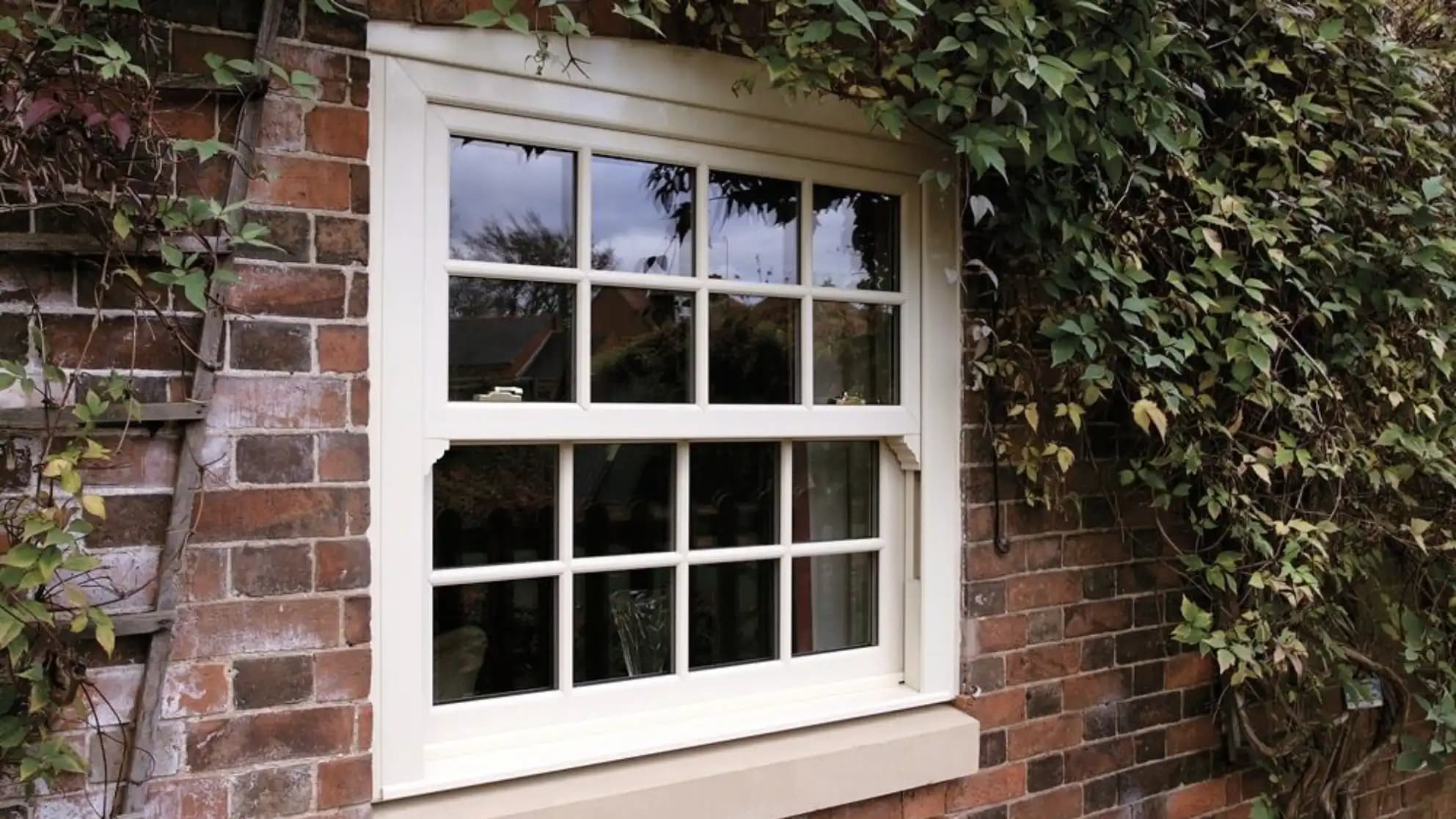
Sliding Sash Windows
Key Specs
- U-value from 1.2 W/m²K (double glazed)
- Spring balance or spiral balance mechanism
- Available in uPVC, timber, and aluminium
- Tilt-in facility for easy cleaning
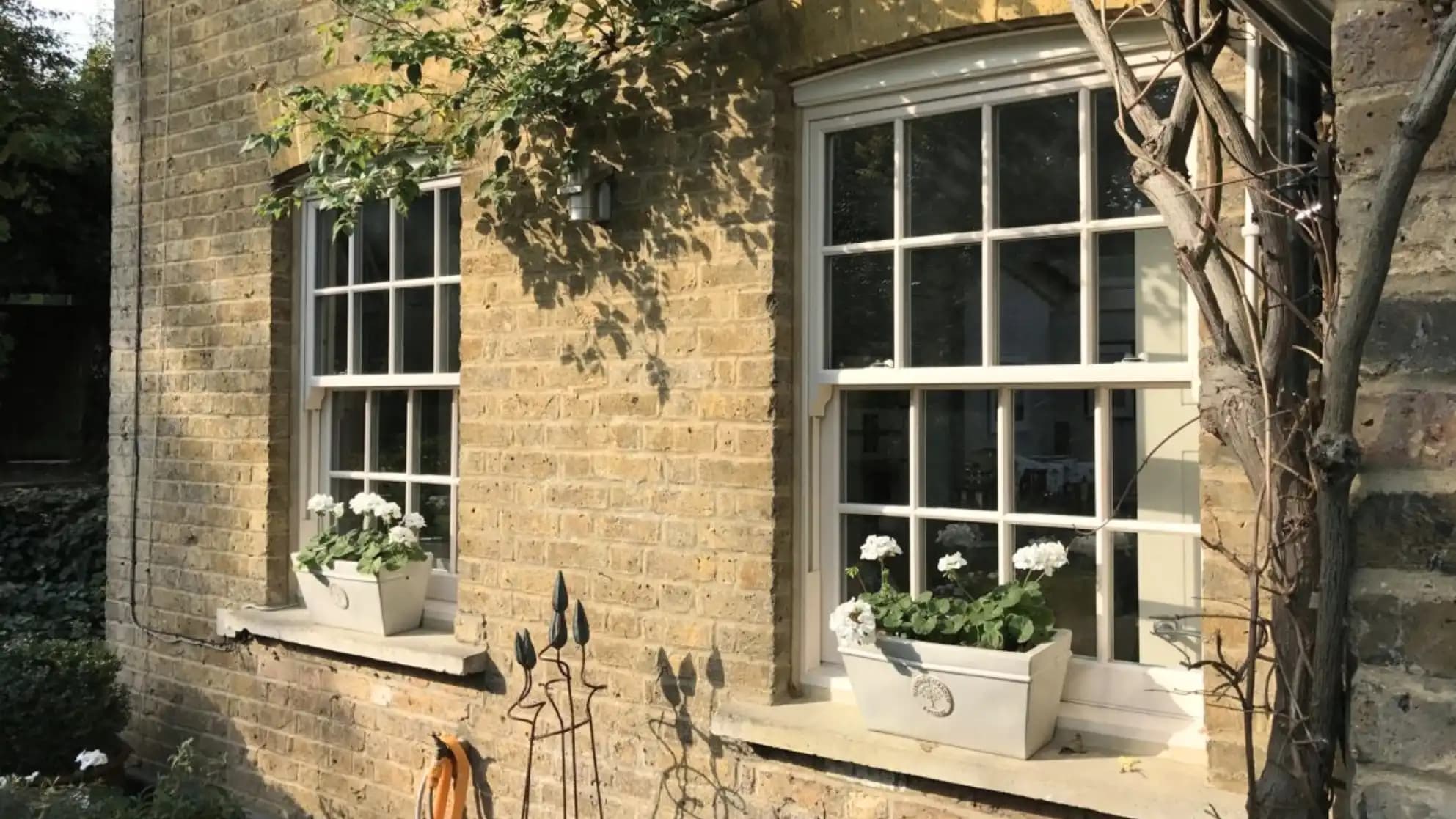
Box Sash Windows
Key Specs
- U-value from 1.4 W/m²K (double glazed)
- Traditional cord, weight, and pulley mechanism
- Primarily timber construction
- Authentic period profiles and proportions
Detailed Comparison
| Feature | Sliding Sash Windows | Box Sash Windows |
|---|---|---|
| Average Cost (supply & fit) | £500-£1,200 | £1,000-£2,800 |
| Energy Efficiency (U-value) | From 1.2 W/m²K | From 1.4 W/m²K |
| Operating Mechanism | Spring/spiral balance | Cord, weight, and pulley |
| Frame Construction | Standard frame (no box) | Box frame housing weights |
| Frame Depth | 90-120mm | 140-180mm |
| Maintenance Required | Low to Moderate | Moderate to High |
| Historical Authenticity | Good (appearance matches) | Excellent (mechanism and construction authentic) |
| Ease of Operation | Smooth and consistent | Requires more effort (heavier sashes) |
| Cleaning Ease | Excellent (tilt-in facility) | Difficult (external access needed) |
| Sash Cord Replacement | Not applicable | Every 10-15 years (£80-£150 per window) |
| Draught Performance | Very Good (modern seals) | Good (brush pile seals) |
| Weight of Sashes | Lighter (modern glazing compatible) | Heavier (weight system compensates) |
| Conservation Officer Approval | Often accepted for unlisted properties | Always accepted |
| Available Materials | uPVC, timber, aluminium | Primarily timber |
Choose Sliding Sash Windows If...
- You want the sash window aesthetic with modern performance and reliability
- Budget is a consideration — sliding sash windows cost 30-55% less than equivalent box sash windows
- Easy cleaning is important, particularly for upper-floor windows where the tilt-in facility is invaluable
- You prefer low-maintenance uPVC or aluminium over timber construction
- Your property is not listed and your conservation area accepts modern sliding sash designs
- Maximum energy efficiency is a priority and you want the best available U-values
Choose Box Sash Windows If...
- Your property is listed and listed building consent requires traditional box sash construction
- You are in a strict conservation area where the traditional cord, weight, and pulley mechanism is specified
- Historical authenticity is paramount and you want the genuine traditional operating experience
- You are restoring a heritage property to the highest possible standard
- You value the longevity of traditional construction — box sash windows can last 100+ years
- Your existing windows are box sash and can be restored rather than replaced, preserving original fabric
Cost Comparison
The cost difference between sliding sash and box sash windows reflects the significant difference in construction complexity. A standard uPVC sliding sash window costs £500-£800 installed, while a timber sliding sash costs £700-£1,200. Box sash windows in softwood cost £1,000-£1,800 and hardwood box sash windows range from £1,500-£2,800. For a Victorian terraced house with 6-8 sash windows, uPVC sliding sash would cost approximately £4,000-£6,500, timber sliding sash £5,500-£10,000, softwood box sash £7,000-£14,000, and hardwood box sash £10,000-£22,000. Restoration of existing box sash windows is often the most cost-effective option at £3,000-£8,000 for 6-8 windows, preserving the originals while dramatically improving performance. Sash cord replacement alone costs approximately £500-£1,200 for a full house, and should be factored into the lifetime cost of box sash windows every 10-15 years. All prices include VAT at 20% and professional installation or restoration by qualified specialists.
Frequently Asked Questions
The key difference is the counterbalance mechanism and frame construction. Box sash windows use the original design with lead or iron weights hidden in hollow box frames, connected to the sashes by cords over pulleys. Sliding sash windows use modern spring or spiral balance mechanisms housed within the sash stiles or frame, eliminating the need for a box frame. Both feature vertically sliding sashes, but box sash windows have a deeper frame and traditional construction.
In the vast majority of cases, yes. Listed building consent typically requires replacement windows to match the originals in material, profile, construction, and operating mechanism. For a building with original box sash windows, this means new box sash windows with the traditional cord, weight, and pulley mechanism. Restoration of the existing windows is usually the preferred option for listed building applications, as it preserves the original historic fabric.
Traditional cotton sash cords typically last 10-15 years before they stretch, fray, and eventually break. Pre-stretched synthetic cords can last 15-20 years. Cord replacement costs approximately £80-£150 per window for professional repair, which involves removing the staff beads, accessing the weight boxes, fitting new cords, and reassembling. Some homeowners learn to do this themselves, reducing the cost to approximately £10-£20 per window in materials.
Yes. Modern slim-profile double glazing units (typically 12-16mm total thickness) are specifically designed for box sash windows, allowing double glazing without requiring significant modifications to the sash profiles. Standard double glazing units (24-28mm) require the sashes to be rebuilt with deeper rebates. Both approaches achieve U-values of approximately 1.4-1.6 W/m²K. The weights need to be adjusted or replaced to compensate for the additional glass weight. For listed buildings, slim-profile double glazing is more likely to be approved as it requires fewer changes to the original sash profiles.
Restoration is usually preferable for several reasons: it preserves the original historic fabric (important for heritage value), the original slow-grown timber is often of higher quality than modern timber, it costs less than replacement (£400-£1,000 vs £1,000-£2,800 per window), and it is more environmentally sustainable. Restoration includes draught-proofing, sash cord replacement, timber repairs, re-glazing, repainting, and hardware refurbishment. Replacement should only be considered if the originals are beyond economical repair.
From a typical viewing distance, high-quality modern sliding sash windows are very similar in appearance to box sash windows. The main visible difference is the frame depth: box sash windows have a deeper reveal due to the weight boxes, creating a different shadow pattern on the facade. The sash profiles, proportions, and hardware can be closely matched. For listed buildings and strict conservation areas, this difference may be sufficient to require box sash construction, but for most other situations, the visual difference is minimal.
Traditional timber box sash windows can last 80-150+ years with proper maintenance — many Georgian originals from the 1700s are still in service. Modern timber sliding sash windows with spring balances typically last 40-60 years. uPVC sliding sash windows last 25-35 years. The exceptional longevity of box sash windows is attributed to the quality of original slow-grown timber, the simplicity and repairability of the cord and weight mechanism, and the deep frame profiles that protect the timber from weather.
Yes, this conversion is possible and involves removing the weights and cords, filling or replacing the weight boxes with insulation, and fitting spring balance mechanisms. This can improve thermal performance by eliminating the draughty weight boxes and reduce maintenance by removing the cord replacement cycle. However, it permanently alters the historic mechanism and is not appropriate for listed buildings. The conversion costs approximately £200-£400 per window and can be done during restoration or re-glazing work.
Secondary glazing involves fitting a separate glazed panel to the interior side of an existing single-glazed window, creating an insulating air gap. It preserves the original window entirely while improving thermal performance (combined U-value of 1.8-2.2 W/m²K) and acoustic insulation (up to 45dB reduction with specialist acoustic secondary glazing). It costs £200-£500 per window. While not as thermally efficient as replacing with double-glazed units, secondary glazing is the preferred approach for listed buildings where altering the original windows is not permitted.
Modern spring balance mechanisms from quality manufacturers (such as Caldwell, Nico, and Maco) are very reliable, with an expected operational life of 20-30 years. They maintain consistent tension throughout their life, do not require regular adjustment, and are relatively inexpensive to replace (£40-£80 per pair including fitting). They are the standard mechanism for modern sash windows worldwide and have proven reliability across millions of installations. Spiral balance mechanisms offer even greater longevity and smoother operation than simple spring balances.
Need Help Choosing?
Our window specialists can help you choose the right windows for your property. Get a free, no-obligation consultation.